
As of 2025, Sarawak General Hospital’s recognition as one of Malaysia’s leading research institutions for three consecutive years, and its selection by a Swiss pharmaceutical giant, Roche Pharmaceutical, as the first hospital in the Asia Pacific to conduct first-in-human clinical trials for new experimental drugs in oncology and rheumatology, represents more than a scientific milestone.
It reflects Sarawak’s growing capacity to meet international standards in biomedical research and signals its emergence as a credible player within the global life sciences ecosystem.
This milestone matters because it brings promising therapies closer to Sarawakian patients, draws international partnerships into the region, and builds long-term capacity in clinical science.
It also enhances Sarawak’s standing, nationally and internationally, as a credible centre for high-quality clinical research.
What This Recognition Means for Sarawak General Hospital
Sarawak General Hospital’s status as a leading research institution is the outcome of long-term institutional development rather than rapid transformation.
It is the product of years of deliberate investment in infrastructure, strict adherence to ethical and regulatory standards, the development of specialist medical expertise, and the steady building of trust with partners both within and beyond Malaysia.
Its selection as a first-in-human (FIH) clinical trial centre marks a particularly high-stakes endorsement.
These trials are among the most sensitive and tightly controlled in medical research involving experimental drugs, often aimed at treating serious diseases like cancer, being tested in humans for the very first time.
For an international pharmaceutical company to assign such work to Sarawak General Hospital speaks volumes about the hospital’s governance, clinical discipline, and patient care record.
At a broader level, this milestone positions Sarawak General Hospital—and Sarawak—as an active participant in the global clinical research ecosystem.
It shows that the state is not merely a consumer of medical breakthroughs but an active contributor to advancing drug development and biomedical innovation, reflecting a growing maturity in research capacity and ethical standards.
Impact on the People
Earlier Access to Cutting-Edge Treatments
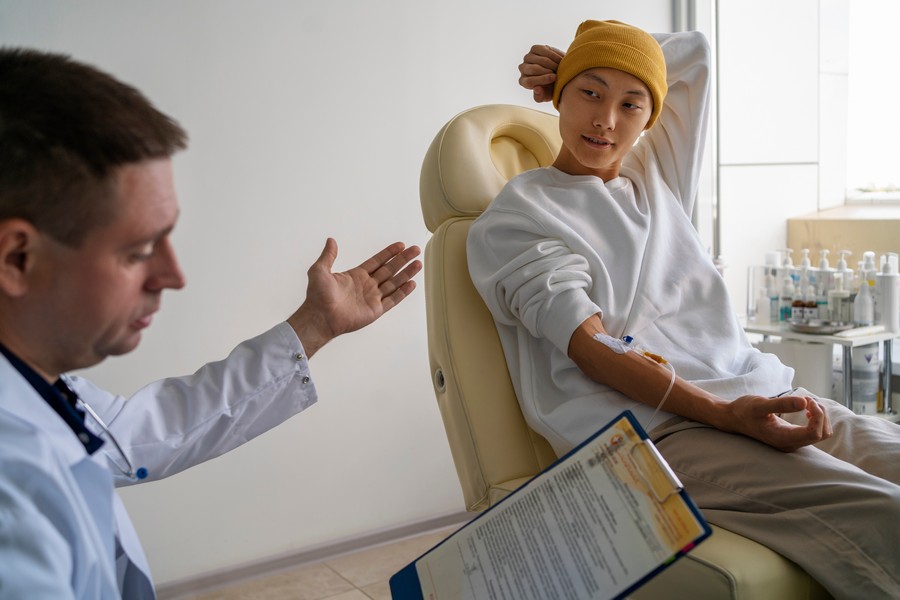
By participating in first-in-human (FIH) trials and other advanced clinical studies, patients in Sarawak can gain early access to innovative therapies, including emerging cancer treatments, potentially ahead of their availability in hospitals worldwide.
This is especially crucial for oncology, as cancer remains one of Malaysia’s most pressing health concerns.
According to the Department of Statistics Malaysia (DoSM), cancer constituted 12.6% of all medically certified deaths in 2022, positioning it as the fourth most common cause of death in Malaysia.
Over the seven years from 2017 to 2023, almost 250,000 Malaysians were newly diagnosed with cancer, with a recorded total of roughly 248,207 cases.
Improved Standard Care
Because clinical trials follow strict international guidelines and involve closer patient supervision, they naturally introduce higher levels of care, which can help raise the quality of treatment in local hospitals.
Economic & Professional Benefits
As Sarawak grows into a research hub, new specialised jobs emerge—from running clinical trials to coordinating studies—giving local medical professionals more reasons to stay.
In the long run, this helps cultivate a growing pool of clinician-scientists and research-trained nurses within the state.
Boost to Public Trust and Morale
For Sarawakians, knowing that world-class research is happening right at home can bring reassurance, hope, and genuine pride.
It may also reduce the need to travel to Peninsular Malaysia or overseas to seek advanced treatments.
Gaps and Challenges in Sarawak’s Research Ecosystem
Nonetheless, this milestone also highlights several gaps and challenges that Sarawak must overcome to sustain and expand its research capabilities:
– Limited Number of Early-Phase Trials Historically
Although Malaysia has advanced in clinical research, Phase 1 oncology trials remain scarce.
Recent findings stress that despite increased activity in cancer research, early-phase trials continue to be limited.
– Dependence on External Sponsors/ Industry-sponsored Research
In Malaysia, a significant share of clinical trial activity—including cancer research—is still led by industry sponsors and facilitated through bodies such as Clinical Research Malaysia (CRM).
The 1,806 trials carried out in the Ministry of Health (MOH) hospitals from 2012 to 2021 illustrate how dependent the system is on external funding, and how easily activity may rise or fall with global investment cycles.
– Need for Skilled Human Capital
First-in-human (FIH) trials demand a highly skilled workforce, including clinician-scientists, research nurses, regulatory and legal professionals, as well as ethics committee members—a requirement that can be challenging to meet outside major urban centres.
– Regulatory, Ethical, and Logistical Complexity
Trials involving high-risk drugs require strict adherence to regulatory standards, ethical oversight, intensive monitoring, and frequently sophisticated laboratory and imaging facilities.
Extending such trials throughout Sarawak could be a challenge, especially beyond major hubs like Sarawak General Hospital.
– Public Awareness and Trust
For many in the community, clinical trials are still largely unknown.
Effective strategies to ensure informed consent, cultivate trust, and enhance public understanding will be key to increasing volunteer participation, particularly in less accessible areas.
National, Regional, and Global Comparison
To grasp why Sarawak General Hospital’s milestone is so important, we need to look at where Malaysia and Sarawak sit on the broader regional and global stage.
In 2021, Malaysia reached a new milestone with 215 clinical studies nationwide, and oncology ranked second with 33 new trials.
Industry-sponsored activity has strengthened over time, rising from 143 trials in 2010 to 201 in 2015.
Nonetheless, the availability of early-phase oncology trials, especially Phase 1 studies, remains limited.
In comparison, several leading Asia-Pacific (APAC) nations operate far more developed clinical trial ecosystems:
– As of 2024, the region’s clinical-trials market was worth USD 16.82 billion, and is expected to rise significantly, reaching USD 34.23 billion by 2033.
– In the 2020 – 2025 timeframe, Singapore—a well-established research hub—recorded 1,179 clinical trials, with industry-sponsored studies making up 47% of the total.
– Around the world, early-stage and validation trials are increasingly being directed to the Asia-Pacific region.
The region is becoming a preferred destination for early drug development due to its diverse populations, competitive costs, and expanding scientific capabilities.
Against this backdrop, Sarawak General Hospital’s selection for first-in-human trials is a noteworthy achievement—signalling that Sarawak is not merely catching up, but actively narrowing the gap with regional leaders and establishing itself as a credible player in the global clinical-research landscape.
Proven Strategies from Leading Hubs
The experiences of successful research hubs across the region and globally highlight several tried-and-tested approaches, offering valuable lessons that could shape Sarawak’s development trajectory.
– Strong University / Hospital / Industry Partnerships: In numerous top research centres, strong partnerships among academic institutions, clinical hospitals, and pharmaceutical or biotech companies underpin high research productivity and innovation.
‘- Dedicated Funding Mechanisms and Incentives: Across the region, early-phase trials are often encouraged through national grants, tax breaks, and other financial incentives that lower entry barriers for sponsors.
In Malaysia, initiatives by CRM and supportive regulatory policies have helped strengthen the research landscape.
Streamlined and Robust Regulatory and Ethical Oversight: When regulations are clear and review timelines are well-managed, it becomes easier for sponsors and communities to trust the research process.
Malaysia’s Good Clinical Practice (GCP) guidelines, modelled on international standards, support the conduct of ethical and compliant research.
Investment in Human Capital and Training: Building a strong talent pipeline of clinician-scientists, research nurses, data managers and trial coordinators are essential.
This typically includes comprehensive training pathways, continuous learning, and international partnerships or attachments.
Patient and Public Engagement, and Advocacy: Providing clear, accessible information on clinical trials—including potential benefits, risks, and participant rights—to strengthen public confidence and improve participation, particularly in under-represented and rural population.
Pathways to Advancing Sarawak’s Research Capabilities
Based on these proven approaches and Sarawak’s unique circumstances, the following recommendations are suggested:
Set Up a Dedicated “Sarawak Clinical Research Fund”: Creating a state-level fund to back early-phase trials, infrastructure improvements, and essential logistical support, including rural patient transport and patient follow-up.
Expand Clinical Trial Units Beyond Kuching (Sarawak General Hospital): While Sarawak General Hospital may act as the central hub, extending research activity through satellite units or district hospital partnerships would enhance accessibility and broaden participation, especially among rural and indigenous groups.
Strengthen Training and Talent Retention Programmes: Support young clinicians and nurses with research-focused scholarships and clear career pathways to prevent talent drain from Sarawak.
Enhance Public Education, and Trust-Building: Through targeted community outreach, public forums, and partnerships with local media and grassroots organisations to improve understanding of clinical trials, participant involvement, and their broader significance.
Conclusion
Sarawak General Hospital’s rise as one of Malaysia’s leading research hospitals, and its selection as the first Asia-Pacific centre for first-in-human cancer drug trials, marks a defining moment for Sarawak.
This achievement goes beyond headlines; it signals the start of a broader transformation, one that sees the state move from being known primarily for its natural resources to becoming an active contributor to global medical science.
However, the long-term impact of this achievement will depend on sustained policy support, strategic investment, and institutional commitment.
If Sarawak commits to these priorities, it has the potential to move from the margins to the forefront of cancer research and innovation.
For Sarawakians, this progress could translate into earlier treatments, better care, new careers, and a shared sense of purpose.
This milestone should be acknowledged, but more importantly, it should serve as a foundation for sustained progress.
References:
- Malaysian Clinical Research Highest in 2021 with 215 Studies
- Early Phase Oncology Clinical Trials in Malaysia: Current Status and Future Perspectives
- Asia Pacific Clinical Trials Market (2025 – 2033)
- Singapore Clinical Trials: A Fast, Efficient Hub for APAC Research
- Technology Integration and Access to Eligible Patients Underpin the Growth of Early-Phase Trials in Asia Pacific
- A Guide to Conducting Clinical Trials in Malaysia (2016 First Edition)
- DoSM 2023 Report: Cancer Fourth Leading Cause of Death in Malaysia
- Almost 250,000 Malaysians Diagnosed with Cancer from 2017 to 2023
- Malaysia’s Clinical Research Ecosystem and the Role of CRM in Advancing ISR in the Country
- Malaysia National Cancer Registry Report 2017–2021
- Statistics on Causes of Death Malaysia 2023