
- Advertisement -
5,256
published news
and counting

Beyond the Degree

Must read

Global economic shifts driven by the Fourth Industrial Revolution (IR4.0) and the transition to a low-carbon economy are rapidly transforming job requirements.

The World Economic Forum predicts that 44% of core workforce skills will change within a decade, creating a critical skills gap.

The International Labour Organization (ILO) estimates that 40% of jobs will undergo significant changes by 2030.

This gap stems not from a lack of jobs, but from conventional education systems failing to keep pace with industry needs, as the World Bank confirms that over 60% of employers in middle-income countries struggle to find suitably skilled workers.

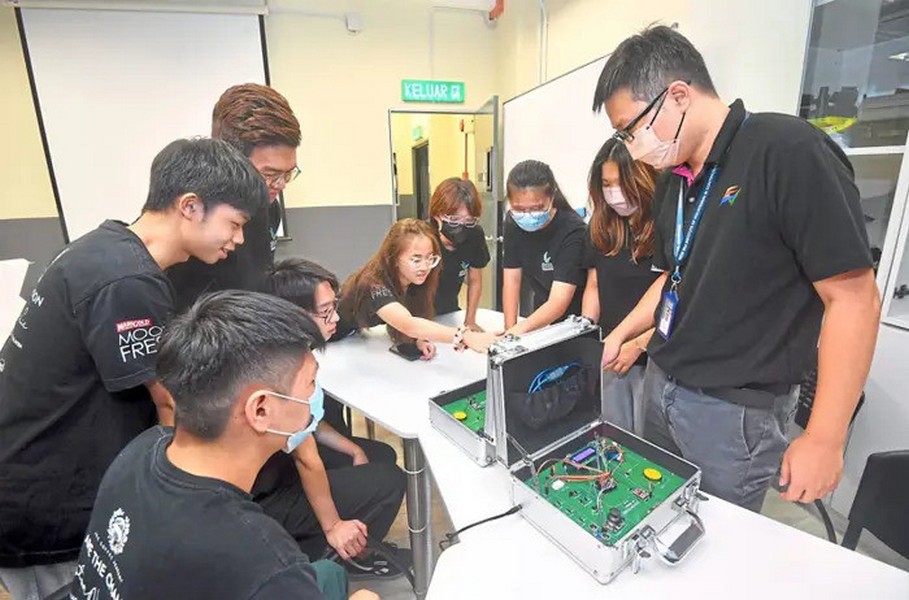
In response, Technical and Vocational Education and Training (TVET) has gained international recognition as a core solution.

United Nations Educational, Scientific and Cultural Organization (UNESCO) highlights TVET’s critical role in achieving sustainable development goals.

Countries with integrated TVET systems, like Germany and Switzerland with their dual training models, achieve graduate employability rates above 90% and youth unemployment as low as 3-4%.

The economic returns are substantial: the World Bank reports annual returns of 6-15% on quality TVET investment, while the Organisation for Economic Co-operation and Development (OECD) notes that consistent investment leads to 5-10% increases in labour productivity.

In the Asia-Pacific region, which will host over 45% of global technical job growth by 2030, nations like Singapore and South Korea are aggressively investing in skills development.

Malaysia has made significant strides, with over 1,300 TVET institutions achieving graduate employability rates exceeding 94%, surpassing traditional degree holders.

The Academy in Industry (ADI) program demonstrates the effectiveness of industry-integrated training, with 86.3% of graduates securing employment and 61% receiving salary increases.

Strategic partnerships with companies like PROTON, Huawei, and PETRONAS ensure graduates enter high-demand, well-paying fields.

For Sarawak specifically, TVET presents a strategic opportunity to address unique regional challenges.

With its economy centred on energy, oil and gas, and green technology, and its geographically dispersed population, TVET serves as both an economic driver and a tool for inclusive development.

Institutions like Centre for Technology Excellence Sarawak (CENTEXS) and Sarawak Skills maintain graduate employability around 93%.

TVET can reduce rural youth migration, support local economic development, and enable communities to participate in emerging sectors like renewable energy.

High-demand fields in the state include Electrical & Electronics Technology, Digital Technology & AI, Oil, Gas & Energy Technology, and Green Technology, with starting salaries ranging from RM2,800 to RM6,000.

However, challenges remain. Without consistent quality standards and continuous upskilling, technical skills risk obsolescence within five to seven years.

Low industry involvement can reduce long-term employability by 10-20%.

The World Bank emphasizes shifting focus from graduate numbers to measuring real economic outcomes like income growth and social mobility.

For Sarawak, strengthening data-driven graduate tracking and ensuring active industry participation in curriculum design are crucial.

TVET has evolved from a second-choice option to a primary career pathway.

It offers immediate employability, competitive salaries, and diverse opportunities in critical sectors such as AI, robotics, and green technology.

For school leavers, existing workers, and industry leaders alike, embracing TVET is essential for remaining relevant in a rapidly changing economy.

It represents not merely training, but a skills revolution and an economic catalyst that ensures inclusive development for all Sarawakians.

References

Abdul Razak, A. R., Mohd Yunos, J., & Kassim, H. (2022). Curriculum realignment in TVET for IR 4.0: A review of policy and practice in Malaysia. Journal of Technical Education and Training, 14(2), 55–67.

Almeida, R., & Carneiro, P. (2012). The return to firm investment in human capital. World Bank, Washington, DC. https://documents.worldbank.org/en/publication/documents-reports/documentdetail/416381468339383961/the-return-to-firm-investment-in-human-capital

Bernama. (2025, March 11). Sarawak intensifies TVET training, expands collaboration with strategic industries. Bernama. https://www.bernama.com/en/news.php?id=2486676

Bernama. (2025, November 11). *MARA TVET graduates’ marketability rate exceeds 97 per cent – Rubiah Wang*. Bernama. https://www.bernama.com/en/general/news.php?id=2489724

Iqbal, A., & Dempster, H. (2026). Exploring donor investments in green TVET. Center for Global Development. https://www.cgdev.org/publication/exploring-donor-investments-green-tvet

Ismail, A. A., & Hassan, R. (2019). Technical competencies in digital technology towards Industrial Revolution 4.0. Journal of Technical Education and Training, 11(3), 1–9.

Mohamed, M. G., Kasim, N. A., & Chen, W. K. (2025). TVET and the economic competitiveness of Sarawak: The role of the mechanical engineering certificate program in developing a skilled workforce. Politeknik & Kolej Komuniti Journal of Life Long Learning, 9(1), 1–12. https://app.mypolycc.edu.my/journal/index.php/PKKJLLL/article/view/781

- Advertisement -

Rasid, N. M., Royo, M. A. B., & Jabor, K. B. (2025). TVET 4.0: Integrating digital pedagogy and Industry 4.0 skills into Malaysian community college programmes. International Journal of Academic Research in Progressive Education and Development, 14(4), 1731–1744. https://hrmars.com/ijarped/article/view/27068/TVET-40-Integrating-Digital-Pedagogy-and-Industry-40-Skills-into-Malaysian-Community-College-Programmes

UNESCO-UNEVOC. (2020). Innovation and the future of TVET teaching and learning. UNESCO-UNEVOC International Centre for Technical and Vocational Education and Training. https://unevoc.unesco.org/future-tvet

Wong, G. S., & Abdullah, N. S. (2025). Job readiness level to address 4.0 skills: An empirical study on TVET students in electrical and electronics field. Journal of Technical Education and Training, 17(1), 45–58. https://publisher.uthm.edu.my/ojs/index.php/JTET/article/view/19969

World Economic Forum. (2020). The Future of Jobs Report 2020. World Economic Forum. http://www3.weforum.org/docs/WEF_Future_of_Jobs_2020.pdf

Click to rate this post!
[Total: 0 Average: 0]
- Advertisement -spot_img

More articles

- Advertisement -spot_img

Latest article