


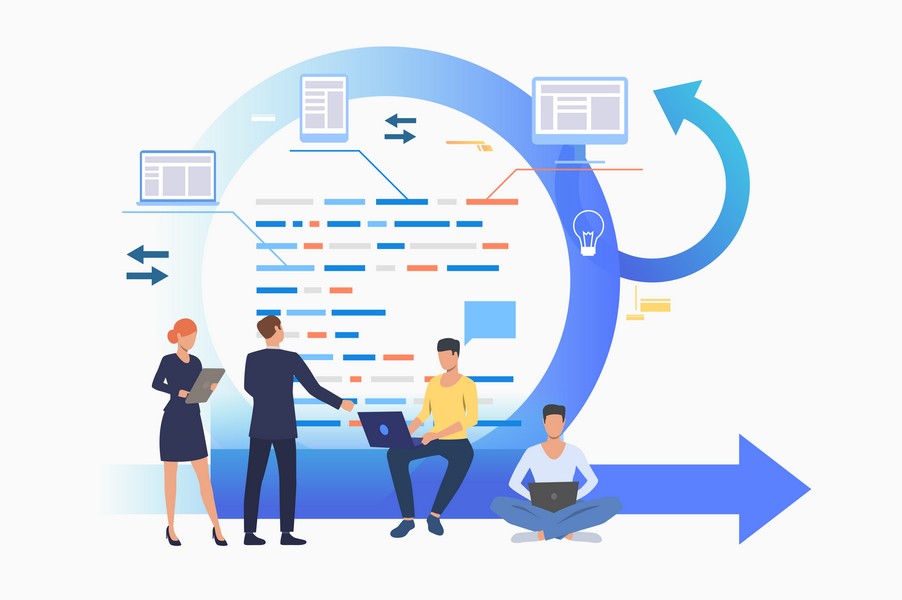

The implementation of Lean principles within the Sarawak Civil Service has gained significant momentum through a series of targeted, high-impact initiatives launched in recent years, reflecting a decisive shift toward operational efficiency and citizen-centric governance.
Central to these efforts is the ongoing rollout of the Sarawak Civil Service One Team Retreat initiative, which has served as a strategic platform for embedding Lean thinking across departments by emphasizing collective accountability, mindset transformation, and the elimination of bureaucratic silos.
Building on this foundation, the Sarawak government has accelerated its digital transformation agenda, achieving 59.4 percent online service availability as part of a broader push toward full digitalisation, with flagship systems such as the e-Land and e-Biz platforms streamlining land administration and business licensing processes that were historically mired in delays.
Complementing these digital advances is the strategic restructuring of non-core functions, whereby state assets and commercial activities are progressively hived off to Government-Linked Companies operating under corporate Lean principles, allowing the core civil service to concentrate on policy formulation and governance.
These recent initiatives collectively represent a foundational shift in how public services are designed and delivered, moving beyond incremental improvements toward a systematic application of Value Stream Mapping across priority service areas.
This foundational methodology involves meticulously documenting every step of a government service delivery process, from initial citizen request to final resolution, and identifying precisely where value is added and where waste in its various forms occurs.
For critical services such as land title applications, which remain fundamental to economic development and individual wealth creation, or business licensing processes that determine how quickly entrepreneurs can translate ideas into operating enterprises, the application of Value Stream Mapping can reveal surprising sources of delay and frustration.
By visualising the flow of information as it moves through the administrative system, the Sarawak Civil Service can identify where waiting periods accumulate between processing steps, where over-processing creates unnecessary work without corresponding value, and where defects in documentation or decision-making require costly rework that extends processing times and erodes citizen confidence.
This diagnostic phase provides the empirical foundation for subsequent redesign efforts, ensuring that changes are based on actual process data rather than anecdotal impressions or theoretical assumptions about where problems lie.
Following the diagnostic phase, the redesign of core processes must proceed with the active participation of the civil servants who understand the work intimately and the citizens who experience its outcomes directly.
The elimination of redundant approvals represents a particularly promising opportunity in the Sarawak context, where layered hierarchies have historically required multiple sign-offs for decisions that could be made more efficiently at lower levels with appropriate accountability mechanisms.
Each additional approval layer adds waiting time without necessarily adding value, and the cumulative effect of these multiple layers can extend simple decisions over weeks or months.
The automation of routine tasks through digital technologies offers another avenue for waste reduction, freeing skilled human resources from repetitive data entry and document processing to focus on more complex judgments and citizen interactions that require uniquely human capabilities.
This reallocation of human talent from transactional to transformational work represents one of the most significant potential benefits of Lean implementation, as it enables the civil service to do more with existing headcount by deploying people where they can add greatest value rather than where historical precedent has placed them.
A pivotal strategy currently being deployed in Sarawak with considerable promise is the restructuring of non-core functions through strategic separation from the main civil service apparatus.
By hiving off the management of state assets and strategic investments to Government-Linked Companies that operate on professional, corporate lean principles derived from private sector practice, the core civil service can focus its energies and expertise entirely on policy formulation and governance functions that require public sector oversight.
This approach, which might accurately be termed Lean Restructuring, ensures that the administrative core remains small, focused, and highly skilled while the operational arms responsible for commercial activities are driven by market efficiency considerations and clear return on investment expectations, eventually returning dividends to the state coffers that can fund additional development initiatives.
The Canadian experience with similar restructuring during the Program Review exercise of the 1990s demonstrates the potential of this approach.
That exercise led to significant structural change in the federal government’s involvement in the economy, including a 60 percent reduction in subsidies to businesses and divestitures of major Crown corporations such as airports and the air navigation system.
These reforms produced considerable fiscal savings, reduced the size and scope of the federal government, and ultimately helped usher in a period of sustained economic growth and job creation.
Canada’s total government spending as a share of GDP fell from 53 percent in 1992 to 39 percent in 2007, and despite this 14-percentage point decline in the relative size of government, the economy grew, the job market expanded, and poverty rates fell dramatically.
This historical precedent suggests that ambitious refocusing of government scope and size can lead to improved services and better economic outcomes when conducted thoughtfully rather than through crude austerity measures.
The physical development of Sarawak stands to benefit immensely from Lean public services through the systematic streamlining of infrastructure project cycles that have historically been plagued by delays and cost overruns.
Currently, large-scale projects of strategic importance, such as the Coastal Road and the Second Trunk Road that will transform connectivity along Sarawak’s extensive coastline, require complex coordination between multiple agencies with different mandates, priorities, and timelines.
The delays that result from poor coordination between these agencies translate directly into extended project completion dates and increased costs that ultimately burden the state budget and delay the realisation of economic benefits.
Lean implementation in the infrastructure domain, particularly through Integrated Project Delivery methodologies and Building Information Modelling technologies, offers the potential to dramatically reduce the waste of rework and construction delays that have historically characterised major public works.
When public service agencies responsible for utilities provision, land acquisition, and environmental permitting operate on a Lean, synchronised timeline with clear handoffs and shared performance metrics, the physical transformation of the state can be achieved faster and with lower fiscal leakage than under traditional fragmented arrangements.
This efficiency directly impacts the state’s goal of ensuring that physical infrastructure is not merely built, but built sustainably and within projected timeframes that allow communities and businesses to plan with confidence.
The specific infrastructure targets embedded in Sarawak’s development plans underscore the urgency of this Lean approach to physical development.
The expansion of the telecommunications grid to achieve 96 percent high-speed connectivity across the state’s diverse and challenging terrain requires coordinated action between multiple agencies responsible for rights-of-way, environmental assessment, utility coordination, and service standards.
Each month of delay in achieving this connectivity represents a month of foregone economic opportunity for rural communities and businesses that remain excluded from the digital economy that increasingly drives growth and innovation.
Similarly, the ambitious targets for renewable energy development, including Sarawak’s emerging role as a regional hub for hydrogen production and export, depend on timely infrastructure delivery that cannot be achieved under traditional bureaucratic timelines.
The application of Lean principles to infrastructure project management thus carries direct implications for Sarawak’s competitive position in emerging industries and its ability to attract the investment necessary to achieve high-income status by 2030.
From an economic perspective, Lean Public Service functions as a primary driver of improved performance on the Ease of Doing Business indices that influence investment decisions in an increasingly competitive global economy. Investors, whether domestic entrepreneurs or multinational corporations considering regional headquarters locations, are naturally attracted to jurisdictions where the civil service is responsive, predictable, and transparent in its dealings with the private sector.
By applying Lean methodologies to the investment approval process, Sarawak can dramatically reduce the lead time required for a manufacturer to establish a new plant or for a green energy firm to commence exploration and development activities.
Every day saved in the approval process represents a day of earlier revenue generation, earlier job creation, and earlier economic multiplier effects that benefit the broader community.
This responsiveness is vital for achieving the PCDS 2030 goal of attracting sufficient investment to generate RM282 billion in gross domestic product value by the end of the decade.
If the civil service can systematically eliminate the Muda of bureaucratic indecision and interminable waiting periods, Sarawak becomes a more competitive destination for investment compared to neighbouring regions that have not undertaken similar administrative reforms.
The economic benefits extend beyond the immediate investment attraction to encompass broader human capital development, as a Lean civil service encourages and enables the development of a highly skilled workforce that understands and can work with future technologies, including the complex requirements of carbon trading and hydrogen production, rather than one bogged down by manual data entry requirements and archaic paper-based filing systems that offer no developmental value.
The efficiency gains achievable through Lean implementation in the public sector are not merely theoretical possibilities but empirically documented outcomes from jurisdictions that have undertaken similar reforms.
The Warwick Business School research documented specific achievements that, if replicated in Sarawak, would transform the citizen experience of government.
The halving of end-to-end time for planning applications would dramatically accelerate the pace of private sector development and housing construction, with corresponding economic and social benefits.
The reduction of payroll errors from 75 percent to two (2) percent would restore citizen confidence in government reliability and reduce the administrative burden of error correction that diverts resources from value-adding activities.
The reduction of backlogs by 80 percent in services experiencing congestion would restore timeliness to service delivery and eliminate the hidden costs that citizens bear when forced to wait months or years for decisions that should require weeks.
The reduction in average time to first healthcare appointment from 23 to 12 days would improve health outcomes and reduce the progression of treatable conditions to more serious and costly stages requiring hospitalisation.
The 48 percent reduction in time patients spend in treatment would increase healthcare system capacity without additional infrastructure investment, allowing more citizens to receive care with existing resources.
These documented achievements provide a compelling evidence base for Lean adoption while also establishing realistic expectations about the magnitude of improvement that dedicated implementation can achieve.
The social development of Sarawak represents perhaps the most critical domain where Lean philosophy can deliver transformative benefits for ordinary citizens.
Social inclusivity, identified as a fundamental pillar of the PCDS 2030 development strategy, requires that healthcare services, educational opportunities, and welfare support reach the furthest corners of the state without being diluted by administrative costs that consume resources intended for direct service provision.
In a Lean public service, the focus of all activity shifts fundamentally to what Lean practitioners term Citizen Value, defined as those outcomes and experiences for which citizens are willing to allocate tax resources and to which they attach genuine importance in their daily lives.
This citizen value focus stands in marked contrast to traditional public administration approaches that prioritise compliance with internally generated procedures and adherence to hierarchical expectations over the actual experience of service users.
In the healthcare sector, applying Lean methodologies, often termed Lean Healthcare in the specialised literature, can substantially reduce waiting times in outpatient clinics where patients currently spend hours for consultations that require minutes of professional attention.
Lean approaches can optimise the distribution of medicines to rural Pusat Kesihatan, ensuring that essential supplies reach remote clinics in a timely manner and that stockouts requiring patients to travel long distances for essential medications become increasingly rare events.
In education, Lean principles can streamline the delivery of free tertiary education initiatives, ensuring that eligible students receive their entitlements without navigating complex application procedures and enduring lengthy processing delays.
The rollout of English-medium STEM programmes, critical for preparing Sarawakian youth for participation in the global knowledge economy, can proceed more rapidly and effectively when administrative processes supporting curriculum development, teacher training, and material distribution operate with Lean efficiency.
The resource implications of Lean social service delivery merit particular attention in the Sarawak context.
When the civil service operates efficiently, more of the state’s financial resources are available for direct social intervention rather than being consumed by the overhead costs of the administration itself.
Every ringgit saved through process improvement in the delivery of welfare payments is a ringgit that can be directed to increasing payment levels or extending coverage to additional eligible recipients.
Every hour of civil servant time freed from unnecessary paperwork and redundant approval requirements is an hour that can be redirected to direct citizen engagement and problem-solving.
The cumulative effect of these efficiency gains is a narrowing of the wealth gap and progress toward the targeted median household income of RM15,000 per month by 2030.
Lean public service thus functions not as a withdrawal of the state from social provision but as a reorientation of state activity toward what matters most for citizen wellbeing, with administrative processes serving as means to social ends rather than ends in themselves requiring ever-increasing resource allocations.
However, a critical analysis of Lean implementation in Sarawak must acknowledge frankly the cultural and structural barriers that exist and that could undermine reform efforts if not addressed with appropriate strategies.
The most significant challenge is the silo mentality deeply embedded in many government organisations, where departments guard their data and processes jealously, viewing Lean initiatives as potential threats to their traditional authority, budget allocations, or staff headcount.
This defensive posture is entirely understandable from the perspective of organisational self-preservation but becomes a profound obstacle when cross-functional process improvement requires data sharing, joint problem-solving, and collective accountability for outcomes that no single department controls entirely.
The existence of what researchers have termed state-level bottlenecks in Sarawak’s governance architecture reflects this silo mentality operating at the highest levels, with central agencies reluctant to delegate authority to local bodies despite the efficiency gains that could result from moving decision-making closer to citizens.
Breaking down these silos requires not merely technical process redesign but fundamental cultural change supported by consistent leadership messaging and, critically, by incentive systems that reward collaboration rather than turf protection.
There is also the significant risk that Lean principles may be misinterpreted by managers and political leaders as simply meaning Mean, leading to employee burnout through unreasonable productivity expectations or to reductions in service quality in misguided attempts to cut costs without understanding value drivers.
This misinterpretation represents perhaps the greatest threat to sustainable Lean implementation, as it generates resistance from public servants who experience Lean not as empowerment to improve their work but as another management fad imposing additional burdens without corresponding benefits.
Ethnographic research on Lean implementation in public sector contexts has documented the scepticism that can arise when Lean is introduced without adequate attention to the professional culture and values of public servants.
One detailed study found that Lean was met with significant scepticism and was seen by experienced social workers as a waste of time that interfered with their ability to serve clients effectively.
The research argued that the persuasiveness of Lean depends critically on building a metaphorical connection between organisational aims and individual professional experiences, a connection that cannot be assumed but must be actively cultivated through authentic engagement with front-line workers.
While Lean purports to be a win-win methodology that eliminates waste through worker participation, empowerment, and enthusiasm, the research pointed to contrary experiences where Lean implementation generated resistance rather than commitment.
These findings underscore the importance of implementation process quality and the dangers of treating Lean as a technical fix rather than a socio-technical transformation requiring attention to human as well as process factors.
To overcome these predictable yet serious challenges, the Sarawak Civil Service must prioritise what might be termed Lean Culture over the mechanistic application of Lean Tools.
This fundamental distinction recognises that sustainable improvement requires a shift in mindset throughout the public service, from civil servants viewing themselves as masters of the public entitled to deference and compliance, to servants of the citizen focused on creating value and resolving problems.
This cultural transformation requires that every civil servant, regardless of position or seniority, be genuinely empowered to suggest improvements in work processes, a concept known in Lean terminology as Kaizen, or continuous improvement through small, incremental changes initiated by those closest to the work.
When front-line workers who process applications, answer citizen inquiries, and deliver services directly observe inefficiencies and obstacles daily, they possess unique knowledge about improvement opportunities that managers removed from operational reality cannot access.
Tapping this knowledge reservoir requires psychological safety, the confidence that suggesting improvements will be welcomed rather than punished, and genuine responsiveness when improvement ideas are advanced.
Leadership must demonstrate unwavering commitment to Lean principles through visible action; if the top levels of the administration do not model Lean behaviours in their own work, delegating improvement to subordinates while maintaining traditional command-and-control postures, the initiative will likely remain a superficial exercise in standardisation and documentation rather than achieving true cultural transformation.
The integration of digitalisation with Lean methodology offers particular promise for overcoming resistance and embedding new ways of working in the Sarawak Civil Service.
When digital tools automate routine transactions and provide ready access to performance data, they reduce the burden on human workers while simultaneously increasing transparency and accountability.
The current achievement of 59.4 percent online service availability represents a foundation upon which further digitalisation can build, with the target of full digital transformation providing a clear objective toward which improvement efforts can be directed.
However, the Premier’s admonition that transformation is driven not by technology alone but by mindset must remain central to implementation strategy.
Digital tools can amplify and accelerate the effects of Lean process redesign, but they cannot substitute for the fundamental rethinking of work that Lean requires.
When digitalisation simply automates inefficient processes, it risks locking in waste at higher speed rather than eliminating it, creating the illusion of progress while underlying problems persist.
The integration of systems across departmental boundaries, the strengthening of data use for decision-making, and the automation of processes must therefore proceed in tandem with Lean thinking that questions fundamental assumptions about how work should be organised and what outcomes truly matter.
The physical development benefits of Lean implementation extend beyond infrastructure project delivery to encompass the entire built environment and natural resource management framework.
Sarawak’s ambitious plans for renewable energy development, including hydropower expansion and emerging hydrogen production capacity, depend on regulatory processes that are both rigorous in protecting environmental values and efficient in enabling timely investment.
Lean approaches to environmental permitting can ensure that review processes focus on genuinely significant potential impacts rather than expending equal attention on trivial matters, that parallel rather than sequential reviews reduce overall timelines, and that clear performance standards replace subjective decision-making that invites delay and inconsistency.
The same principles apply to land administration, where Sarawak’s unique customary land tenure systems require processes that respect traditional rights while enabling economic development.
Lean process redesign in this sensitive area must proceed with particular attention to the voices of affected communities, ensuring that efficiency gains do not come at the cost of equity and inclusion.
From an economic perspective, the cumulative effect of Lean implementation across multiple service areas is a transformation in the investment climate that positions Sarawak favourably against competing jurisdictions.
Investors evaluating potential locations for manufacturing facilities, service operations, or resource development projects consider not only headline tax rates and incentive packages but also the day-to-day experience of dealing with government regulators and service providers.
A jurisdiction where business licence applications process reliably within days rather than months, where customs clearances proceed predictably, and where regulatory approvals follow transparent timelines and criteria gains a competitive advantage that no amount of fiscal incentive can overcome.
The Ease of Doing Better index, building on the World Bank’s Doing Business methodology but extending to encompass the full range of government-business interactions, becomes a strategic asset that Sarawak can cultivate through sustained Lean implementation.
The Premier’s vision of Sarawak as the Economic Star of Asia depends on this administrative transformation as much as on natural resource endowments or strategic location.
The social benefits of Lean implementation, while perhaps less immediately visible than economic gains, ultimately matter more for the legitimacy and sustainability of the political system.
Citizens who experience government as responsive, efficient, and respectful of their time and needs develop trust in public institutions that carries over into other domains of civic life.
Citizens who experience government as unresponsive, inefficient, and indifferent to their circumstances become cynical about public purposes and resistant to collective action requiring their cooperation and contribution.
Lean public service thus contributes to the social capital that underpins effective democratic governance, rebuilding the connection between citizens and the state that has eroded in many jurisdictions as bureaucracy has expanded without corresponding improvements in service quality.
The PCDS 2030 vision of a prosperous, inclusive, and sustainable Sarawak depends on this social foundation as much as on economic metrics and physical infrastructure.
Lean Public Service constitutes the operational engine that will power Sarawak’s transition into a modern, data-driven, and prosperous region by 2030.
By focusing relentlessly on the elimination of waste in its various forms, the systematic optimisation of value streams from citizen request to service fulfilment, and the strategic adoption of frontier technologies that amplify human capabilities rather than replacing them, the Sarawak Civil Service can bridge the persistent gap between policy intent as articulated in development plans and public impact as experienced by citizens in their daily lives.
The comparative success of nations like Singapore, documented through decades of sustained improvement in government efficiency rankings, provides a roadmap that Sarawak can adapt to its specific circumstances while learning from both the achievements and limitations of other reform efforts.
However, Sarawak’s path will necessarily be unique, tailored to its specific geographical, cultural, and social landscape rather than simply copied from other jurisdictions with different histories and challenges.
As the state moves decisively toward its high-income goal, the civil service must evolve from a traditional regulatory body focused on compliance and control into a dynamic partner in development committed to enabling and accelerating progress across all sectors of society.
The successful implementation of Lean principles will ensure that Sarawak’s physical, economic, and social growth is not only rapid but also sustainable and genuinely inclusive for all citizens regardless of where they live or what circumstances they face.
The ambition is substantial, but the tools and knowledge to achieve it are readily available.
What remains is the sustained commitment to execution that transforms aspiration into reality.
References
Antony, J., et al. (2019). Lean Management Implementation in Public Sectors: Critical Success Factors. International Journal of Lean Six Sigma.
Bakar, N. A. A., et al. (2017). Lean Management Practices and its Effect on Malaysian Local Government Performance. Asia-Pacific Management Accounting Journal.
Fraser Institute. (2014). Canada 2020: The Right Scope and Size of Government. Fraser Institute.
Free Malaysia Today. (2025). Stifled local councils reason for Sarawak’s low public service delivery. Free Malaysia Today.
IMD World Competitiveness Center. (2024). World Competitiveness Yearbook 2024. Lausanne: IMD.
Kim, J. H. (2025). The Adoption and Implementation of Lean and Six Sigma in State Governments and its Impact on Efficiency, Effectiveness, and Equity. All Faculty Scholarship, 42.
New Straits Times. (2017). Lean government ensures better service. New Straits Times.
OECD. (2023). Government at a Glance 2023: Efficiency and Innovation in Public Service. Paris: OECD Publishing.
Openg, A. J. (2025). Keynote Address: Sarawak Civil Service One Team Retreat. Serian: Sarawak Government.
Radnor, Z., & Walley, P. (2006). WBS Research Asks – Can The Public Sector Become Lean? Warwick Business School.
Sarawak Government. (2021). *Post COVID-19 Development Strategy 2030 (PCDS 2030).* Kuching: Economic Planning Unit Sarawak.
Sarawak Tribune. (2026). Lean public service vital to remain efficient. Sarawak Tribune.

ScienceDirect. (2025). The adoption and implementation of Lean and Six Sigma in state governments and its impact on efficiency, effectiveness and equity. ScienceDirect.
ScienceDirect. (2025). Trimming the social body. ScienceDirect.
Womack, J. P., & Jones, D. T. (2003). Lean Thinking: Banish Waste and Create Wealth in Your Corporation. Free Press.
World Bank. (2023). Sarawak Economic Update: Achieving High-Income Status. Washington, D.C.