

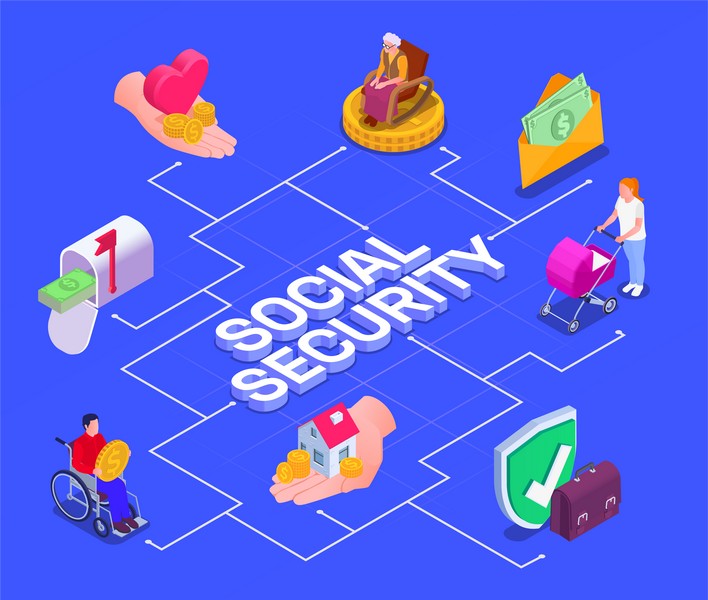

The concept of a social safety net, while universally acknowledged as a cornerstone of modern governance, manifests in remarkably diverse forms across the globe, shaped by unique historical, economic, and cultural contexts.
To fully appreciate the transformative shifts occurring in Malaysia and the specific adaptations within Sarawak, one must first understand the fundamental architecture of social protection from the perspective of the individual, the worker, and broader society, drawing on a wide array of international models and comparative spending data.
At the level of the individual, the social safety net is essentially a promise of dignity in the face of life’s unpredictability.
It is the societal mechanism designed to prevent any person from falling into absolute destitution when confronted with risks such as illness, disability, old age, or the loss of a breadwinner.
This concept transcends mere charity; it is increasingly viewed through the lens of human rights.
The Social Protection Floor Initiative, championed by the International Labour Organization (ILO) and the World Health Organization (WHO), argues that access to essential healthcare and basic income security is a fundamental right that should guarantee a life of dignity, not just survival.
For the individual, the net provides the psychological security to plan, invest in education, or seek better employment, knowing that a temporary setback will not lead to permanent ruin.
The tragic tale of two gig workers in the Elmina plane crash starkly illustrates this reality: for one driver, the safety net meant his family retained a home and hope; for the other, its absence meant immediate financial crisis layered upon grief.
Zooming out to the worker perspective, the social safety net transforms into a structured system of social insurance and labour market interventions.
Core components include unemployment insurance, employment injury protection, sickness and maternity benefits, and old-age pensions.
These schemes serve a dual purpose: protecting the worker’s human capital and promoting efficient labour markets.
Economists have long debated the “moral hazard” problem, yet well-designed active labour market programs (ALMPs) can actively help workers transition between jobs.
In the European Union, total social protection benefits averaged 27.3% of GDP in 2024, with Finland, France, and Austria leading at over 31%.
In stark contrast, public social spending in the Asia/Pacific region is generally well below the OECD average.
While Japan and New Zealand spend about 25% of GDP, countries like China and Mongolia spend around 10%, and nations such as Bangladesh and Papua New Guinea allocate as little as 2%.
This vast disparity underscores that the “generosity” of a safety net reflects a nation’s wealth, political will, and demographic realities.
From society’s vantage point, the social safety net is a critical macroeconomic stabilizer and a tool for social cohesion.
The World Bank has estimated that social safety nets have helped around 36% of the poorest in the world escape extreme poverty.
However, the societal commitment to funding these nets varies enormously.
High-income countries in the OECD spend an average of about 2.7% of their GDP on non-contributory social assistance, while developing countries spend only about 1.5%.
Narrowing this global view to Malaysia reveals a nation engaged in a race to adapt universal principles to a rapidly transforming economy.
The existing framework, built on the Employees Provident Fund (EPF) and the Social Security Organisation (PERKESO), was a classic model for formal sector workers.
However, this system left vast swathes of the workforce exposed, particularly the growing informal and gig economy.
The government’s response, particularly the Gig Workers Act 2025, marks a fundamental shift from a fragmented, voluntary system toward a mandatory, inclusive framework.
By legally obligating platform companies to deduct contributions for LINDUNG Kendiri, Malaysia is attempting to replicate the solidarity and risk-pooling of formal sector social insurance.
Yet this is not a panacea.
The current mandatory coverage focuses almost exclusively on employment injuries.
Critical gaps in unemployment insurance, maternity benefits, and old-age pension savings remain.
Building adequate retirement savings through a defined contribution scheme like the EPF requires contributions of around 15% of salary over a working lifetime.
Simultaneously, Malaysia has made EPF contributions mandatory for foreign employees, a move signalling that social protection is tied to economic participation, not just citizenship.
The enforcement mechanism, integrating EPF systems with the Immigration Department, is a crucial reform to combat evasion.
However, these expansions occur against a backdrop of rising operational costs for businesses, driven by a cumulative 40% increase in the minimum wage to RM 1,700 per month.
This creates a paradoxical cycle: as formal employment becomes more expensive, businesses are incentivized to outsource work to the gig economy, precisely the sector with the weakest protections.
The government’s response, proposing 24-hour coverage (LINDUNG 24/7) and expanding the Employment Insurance System (EIS), is an attempt to build a net wide and strong enough for a fluid workforce.
To understand the full landscape of worker protection in Malaysia, one must look beyond gig economy reforms to foundational schemes for the formal workforce.
At the heart of this system is the Employment Insurance System (EIS), established under the Employment Insurance System Act 2017 and administered by PERKESO.
The EIS provides a structured package for workers who experience involuntary job loss, including the Job Search Allowance (EMP) for three to six months, a Reduced Income Allowance (EPB), an Early Re-Employment Allowance (EBSA) of 25%, and training allowances and fees up to RM4,000.
This comprehensive approach combines income replacement with active labour market intervention.
For gig workers specifically, PERKESO has developed an innovative contribution model tailored to irregular income patterns.
Under the proposed model expected in January 2026, a 1.25% deduction per ride or delivery will be automatically channelled into the protection scheme.
This approach, described as “small enough that it’s negligible, and frequent enough to ensure minimum coverage,” directly addresses the low uptake of the previous voluntary Self-Employment Social Security Scheme (SKSPS), where fixed premiums of around RM200 per month were not viable for many workers.
Within this national transformation, the state of Sarawak offers a fascinating case study of a subnational government actively reinforcing the social safety net in ways tailored to its unique demographic and geographic challenges.
The national government’s flagship cash transfer programs, Sumbangan Tunai Rahmah (STR) and Sumbangan Asas Rahmah (SARA), form the bedrock of Malaysia’s social assistance, with allocations reaching RM15 billion in 2026 to benefit nine million recipients.
Recognizing that national programs may not fully address local needs, the Sarawak government launched its own initiative: the Sarawak Basic Needs Assistance (SKAS).
SKAS is a targeted financial aid program for Sarawakians holding the ‘K’ identification card with household incomes of RM5,000 and below, providing up to RM950 for households, RM500 for senior citizens, and RM300 for single individuals.
For the 2026 budget, Premier Sarawak Datuk Patinggi Tan Sri (Dr) Abang Haji Abdul Rahman Zohari bin Tun Datuk Abang Haji Openg raised the allocation to RM640 million.
What is remarkable about SKAS is its implementation mechanism: it leverages the national STR database to automatically identify eligible recipients and then disburses funds digitally through the S Pay Global app, a state-owned e-wallet platform.
This solves the classic problem of “take-up” of benefits, reducing transaction costs, and reaching vulnerable groups directly.
As Minister Dato Sri Hajah Fatimah Abdullah emphasized, the Premier’s vision is to ensure “not wanting any Sarawakian to go without food on the table.” The high usage rates of SARA in Sarawak, at 99%, suggest this digital, automated approach is highly effective.
SKAS is not just a cash handout; it is a tool for financial inclusion, driving digital payment adoption among rural and elderly populations.
Beyond cash transfers, the Sarawak Labour Ordinance (Chapter 76) was amended effective May 1, 2025, the first significant update in twenty years, addressing maternity leave, paternity leave, and working hour regulations.
The Sarawak Labour Department’s “Labour Department Goes to Rural Areas” (LGRAP) initiative deployed thirty-two four-wheel-drive vehicles from Kuching to Limbang to bring consultation services directly to remote workers.
Sarawak has also expressed strong support for the federal Madani Workers’ Card programme, with over forty companies attending briefing sessions.
At the federal level, the Ministry of Human Resources (KESUMA) under Minister Steven Sim has overseen remarkable expansions: the minimum wage increased to RM1,700; median monthly salary surpassed RM3,000 for the first time; the Progressive Wage Policy benefited over 32,000 workers; the unemployment rate fell to its lowest level in a decade; and the ILO Convention C155 on occupational safety and health was ratified.
The Governor of Sarawak, Tun Pehin Sri Dr. Wan Junaidi Tuanku Jaafar, emphasized that workers serve as the backbone of Sarawak’s development, calling for continued collaboration among government, employers, and employees.
Returning to the original conclusion, Malaysia is indeed engaged in a high-stakes balancing act.
The expansion of mandatory coverage to gig workers and foreigners, coupled with proposed 24/7 coverage and unemployment benefits, represents a paradigm shift from a fragmented, residual model to a more universal, insurance-based “social protection floor.” The success of this transition hinges on resolving the structural challenge of financing adequate retirement savings in a fragmented labour market.
As data on EPF withdrawals shows, even formal sector workers often retire with inadequate savings.
The feasibility study on “portability” is therefore not just a technical exercise; it is the core of the entire reform.
If a worker can move seamlessly from gig work to formal employment and back, carrying their accumulated social security rights, the system will have succeeded.
If not, the new laws risk creating a two-tiered system: one for the old economy with full benefits, and another for the new economy with only injury protection.
The legacy of the Elmina tragedy will not be determined by the passage of the Gig Workers Act alone, but by whether, a decade from now, the family of a gig worker receives a pension that allows them to live with dignity.
The tragedy of exclusion must never be repeated, but the harder work of building a financially sustainable and truly portable system of social protection for the 21st century has only just begun.
References
Bernama. (2025a, October 14). Increase in STR, SARA allocations proves govt’s commitment to strengthen social safety net – MoF.
Bernama. (2025b, December 16). Two years at the helm of KESUMA: Sim highlights gains in workers’ welfare.
Borneo Post. (2025, October 23). Sarawak employers urged to partner in rolling out Madani Workers’ Card.
Borneo Post. (2026, March 17). Minister: SKAS out to ensure vulnerable groups’ direct access to govt’s assistance.
Eurostat. (2025). Social protection benefits expenditure in the EU.
Free Malaysia Today. (2026, March 25). Why mandatory contribution for gig workers is a crucial first step.
Jabatan Premier Sarawak. (2025a, April 30). Workers play key role in realising Sarawak’s development agenda.
Jabatan Premier Sarawak. (2025b, July 1). 各方合作助力砂拉越劳工局 (JTK) 打造包容就业生态系统.
Malaysia.gov. (2026, March 13). Employment Insurance Scheme (EIS) assistance under PERKESO.
New Straits Times. (2026, February 13). Perkeso to study equal protection for formal and informal workers.
OECD. (2025). *Society at a glance: Asia/Pacific 2025: Public social expenditure*.
Paull, G. (1991). Poverty alleviation and social safety net schemes for economies in transition. IMF eLibrary.
PayrollOrg. (2026a, February). Malaysia’s EPF mandate for foreign employees: What investors must reassess.
PayrollOrg. (2026b, January 26). Malaysia strengthens EPF enforcement for non-Malaysian workers.
Pertanika Journal of Social Sciences and Humanities. (2025, October 30). Pre-retirement withdrawal patterns and determinant factors: A case study of Malaysian Employee Provident Fund members.
Service Sarawak. (2026). Check status Sarawak Basic Needs Assistance (SKAS) 2026.
Sustainability Directory. (2025). Social protection → Term.
The Star. (2025, November 24). Sarawak raises SKAS aid and introduces carbon levy in 2026 budget.
The Vibes. (2025, May 5). Minimum wage hike to RM1,700, forcing businesses to rethink operations, says MEF.

United Nations. (2018). Report of the Special Rapporteur on extreme poverty and human rights (A/HRC/38/33).
Vietnam Social Security News. (2025, September 9). Socso aims to start mandatory contribution for gig workers at 1.25% per ride or delivery from 2026.
Wikipedia. (2021). Social safety net.
Yahoo News Malaysia. (2025, September 28). Tale of two gig workers in Elmina plane crash: How Malaysia’s new law closes protection gap, says Steven Sim.