

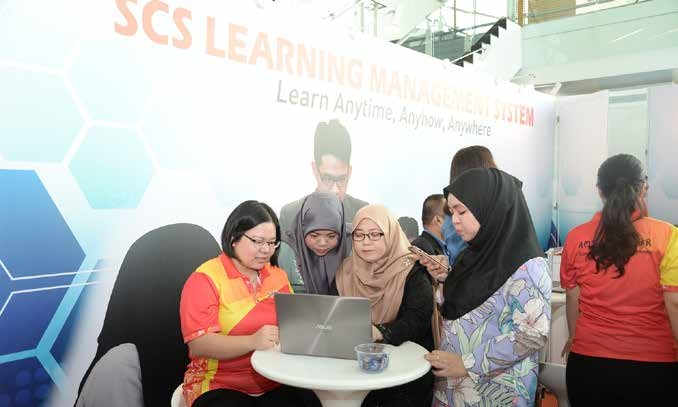

The Sarawak Civil Service has embraced a fundamental shift in its operational philosophy through the “3Rs” framework – Revisit, Rethink, and Recharge championed by State Secretary Datuk Amar Haji Mohamad Abu Bakar bin Marzuki.
This transformative agenda mandates every ministry and department to undertake and document at least ten initiatives aimed at streamlining work processes and delivering outcomes that directly benefit the people.
The strategy aligns with the state’s Post COVID-19 Development Strategy (PCDS) 2030, which envisions a developed Sarawak driven by a digital economy, green energy, and sustainable growth.
The 3R approach urges civil servants to critically examine existing workflows, embrace innovative solutions, and renew institutional energy to meet evolving citizen expectations.
Revisit involves auditing existing regulations to identify outdated provisions or red tape for entrepreneurs, leading to the elimination of bureaucratic hurdles and alignment with current economic realities.
Rethink requires asking why a process exists and removing or automating steps that do not add value to citizens or businesses, resulting in streamlined workflows, reduced processing times, and enhanced user experience.
Recharge injects a fast and responsive culture, transitioning civil servants from office-bound administrators to proactive facilitators, thereby enabling agile, citizen-centric service delivery and improved staff morale and productivity.
Digitalization stands as one of the most visible outcomes of the 3R approach.
As of late 2025, 59.4 percent of civil service processes had been digitalized, surpassing the 2025 target ahead of schedule.
By 2024, 55 percent of 1,106 government services were digitalized, with full digitalization targeted by 2030.
More than 400 services remain manual and are prioritized for accelerated digitalization.
Strategic investments include hundreds of millions of ringgit allocated toward ICT upgrades to support process re-engineering, RM48.5 million dedicated to training and talent development programs for civil servants, and RM300 million allocated for new housing and facilities to support civil servant welfare and retention.
Instead of visiting multiple offices, businesses now access services through single-entry digital platforms, streamlining project and programme delivery excellence and ensuring industrial projects are not stalled by administrative red tape.
The Sarawak Civil Service applies Lean Management principles to identify and eliminate waste in public service delivery.
By empowering junior officers with clear accountability, waiting times for business permits have been drastically reduced through the elimination of redundant approvals.
Agencies use value stream mapping to visualize entire application flows and identify bottlenecks, which has aimed to reduce backlogs in critical services like land title applications by up to 80 percent.
Departments adopt performance indicators focused on citizen outcomes rather than procedural compliance.
The Miri City Council’s Innovative and Creative Circle group, SIRIUS PRIME, revolutionized assessment tax arrears collection by reducing the recovery process from over nine months to three months and two weeks, a 63 percent time reduction, which reduced manpower costs, improved productivity, and enhanced revenue collection.
This innovation, which won the Sarawak Civil Service Sustainability Innovation Award 2024, has been adopted by other councils and is planned for statewide rollout.
Recognizing that transformation is fundamentally about people, Sarawak has invested significantly in civil servant capability and welfare.
A joint welfare contribution scheme allows recruits to contribute to the Employees Provident Fund, providing flexibility to transition between public and private sectors without forfeiting retirement benefits, a strategic move to attract young talent.
A hybrid work policy study with RM1.26 million allocated explores flexible work arrangements prioritizing work-life balance, including special needs assistance and return-to-work initiatives.
Leadership development workshops and digital upskilling courses equip officers with competencies for modern public service.
The Community-Centric Digital Government Program, a strategic collaboration between Universiti Malaysia Sarawak and the Leadership Institute of the Sarawak Civil Service, turns civil servants into digital catalysts.
Participants use the Gather–Assess–Learn–Monitor framework to build competencies in data-driven governance, delivering tangible outputs such as a digital marketplace prototype for local vendors, digital marketing training for handicraft entrepreneurs, and digital literacy outreach.
CCDG 2.0 has been launched as a scalable model to expand participation and integrate insights into state-level digital governance strategies.
To address the digital divide, the Raspberry Pi computer project equips rural schools with affordable computing platforms to enhance digital literacy among teachers and students, providing hands-on learning in coding, robotics, and problem-solving to ensure young Sarawakians in remote communities are not left behind in the global digital race.
Sarawak’s 3R transformation aligns with global best practices in public sector modernization.
International experiences demonstrate substantial returns on investment, with evidence showing that for every one dollar invested in generative AI, organizations realize an average ROI of $3.70.
The UK public sector could save £17 billion by 2035 through GenAI adoption, while a five-year delay could forfeit £150 billion in economic benefit.
Microsoft’s Total Economic Impact study estimates ROI from AI-powered productivity tools ranges from 70 to 364 percent, depending on training and adoption support.
Singapore’s Smart Nation initiative saw the digital economy contribute 11.9 percent of GDP in 2022, with streamlined business licensing reducing approval times from weeks to days.
Estonia provides 99 percent of public services online, with estimated annual savings of 2 percent of GDP through digital processes.
The UK’s Government Digital Service saved an average of four hours per employee per week by automating routine tasks, representing potential savings of 23 million hours weekly across the public sector.
Australia’s whole-of-government Copilot trial found that 69 percent of users reported faster task completion, with an average of one hour saved per workday per employee.
In Belgium, administrative staff saved 102 hours per year, and policy professionals saved 51 hours per year through AI-assisted workflows.
The OECD Digital Government Index 2023 shows that top performers demonstrate that comprehensive digital government policies correlate with a 30 to 50 percent reduction in service delivery times, a 20 to 40 percent decrease in administrative costs, and higher citizen satisfaction scores averaging 25 points higher on a 100-point scale.
Key success factors from global practice include starting with familiar technologies to minimize disruption, focusing on high-impact use cases, investing in workforce training, ensuring strong data governance frameworks, and adopting cloud-first architectures to reduce maintenance costs while improving security and scalability.
The dedication to excellence across Sarawak’s reforms has garnered significant recognition, including a Special Award at Majlis SIRIM Industri 2024 for commitment to quality management, a Malaysia Book of Records entry for successful implementation of MS ISO 9001:2015 Quality Management System across 58 state agencies, and recognition for the Sarawak Transformation and Innovation Unit for obtaining MS ISO 9001:2015 certification for 57 divisional administration entities, including all Resident and District Offices.
These accolades reflect a fundamental cultural shift from a reactive, bureaucracy-bound culture to a proactive, citizen-centric, high-performance organization ready to meet the challenges of a developed Sarawak by 2030.
As Sarawak advances toward its vision of becoming a developed, high-income region, the 3R framework serves as both a compass and a catalyst.
Key priorities include accelerating legacy service digitalization by targeting the remaining 400-plus manual services for end-to-end digital transformation by 2030, scaling successful innovations such as the Garnishee Proceedings and CCDG models across all local authorities and sectors, deepening international partnerships to build AI, data engineering, and machine learning capabilities aligned with the Sarawak Digital Economy Blueprint 2030, strengthening data leadership by enhancing cross-agency data sharing frameworks to unlock strategic value from public sector data assets, and embedding continuous improvement by institutionalizing the 3R mindset through ongoing capability development.
As Datuk Amar Haji Mohamad Abu Bakar Marzuki noted, transformation is not only about systems or policies; it is fundamentally about people and their willingness to embrace change.
References
Abdullah, A. (2026, January 9). ‘Revisit, Rethink, Recharge’: Sarawak civil service urged to stay relevant. The Borneo Post. https://www.theborneopost.com/2026/01/09/revisit-rethink-recharge-sarawak-civil-service-urged-to-stay-relevant/
Abang Johari Tun Openg. (2025, November 24). Premier: RM300 mln housing initiative to boost support for Sarawak civil servants. Office of the Premier of Sarawak. https://premier.sarawak.gov.my/web/subpage/news_view/5782
Abang Johari Tun Openg. (2025, November 24). RM48.5M to train state civil servants. Sarawak Tribune. https://www.sarawaktribune.com/rm48-5m-to-train-state-civil-servants/
Dayangku Hidayatul. (2025, November 20). Sarawak civil service urged to revisit, rethink, recharge to boost efficiency, excellence. DayakDaily. https://dayakdaily.com/sarawak-civil-service-urged-to-revisit-rethink-recharge-to-boost-efficiency-excellence/
Huong, G. (2025, December 6). Sarawak civil service exceeds 2025 digitalisation target ahead of schedule. Sarawaku. https://sarawaku.com/sarawak-civil-service-exceeds-2025-digitalisation-target-ahead-of-schedule-25178
Leadership Institute. (2024). Request for Proposal (RFP) Project Management Programme (Phase 1). https://www.leadinstitute.com.my/wp-content/uploads/2024/01/Request-for-Proposal-Project-Management-Programme-Phase-1.pdf
Majlis Daerah Lundu. (2016, July 28). MS ISO 9001:2015. The Official Portal of the Sarawak Government. https://lundudc.sarawak.gov.my/web/subpage/webpage_view/187
Marhani, M. A., Abdul Rahim, M. H., Raja Muhammad Rooshdi, R. R., Ismail, N. A. A., & Sahamir, S. R. (2025). Innovative waste management in the Malaysian construction industry: challenges and strategic approaches. International Journal of Service Management and Sustainability, 10(1), 39–50. https://www.ijsmssarawak.com/ijsms_vol_10_1/3.pdf
Microsoft. (2025). Making the case for Artificial Intelligence (AI) in Transforming Public Services. https://wwps.microsoft.com/wp-content/uploads/2025/02/Making-the-case-for-AI-in-Public-Services-ROI-evaluation.pdf
Ministry of Food Industry, Commodities and Regional Development, Sarawak. (2025, November 25). Sarawak strengthens monitoring, biosecurity, exports to curb African Swine Fever spread. The Borneo Post. https://www.theborneopost.com/2025/11/25/sarawak-strengthens-monitoring-biosecurity-exports-to-curb-african-swine-fever-spread/
Mohamad Abu Bakar Marzuki. (2026, January 9). ‘Revisit, Rethink, Recharge’: Sarawak civil service urged to stay relevant. The Borneo Post. https://www.theborneopost.com/2026/01/09/revisit-rethink-recharge-sarawak-civil-service-urged-to-stay-relevant/
Mohamad Abu Bakar Marzuki. (2026, March 5). 2026 年为砂拉越”交付年” 确保发展成果惠及基层 [2026 is Sarawak’s ‘year of delivery’ to ensure development benefits reach the grassroots]. 诗华日报. https://news.seehua.com/post/1449368
OECD. (2024). 2023 Digital Government Index. Organisation for Economic Co-operation and Development. https://www.oecd.org/en/publications/oecd-digital-government-index-2023_en.htm
Raspberry Pi Foundation. (2023, June 29). Raspberry Pi is in every primary school in Malaysia’s largest state. https://www.raspberrypi.com/news/raspberry-pi-is-in-every-primary-school-in-malaysias-largest-state/
RAKAN Sarawak. (n.d.). STIU archives. Retrieved March 31, 2026, from https://www.rakansarawak.com/v3/tag/stiu/
Sapawi, S., Ahmad, A., Valeri, M., & Azman, N. (2024). Change in sustainable waste management behaviour in oil palm community: Application of the theory of planned behaviour. Sustainability, 16(2), 919. https://doi.org/10.3390/su16020919
Sarawak Premier’s Department. (2025, April 9). Embrace ‘Revisit, Rethink, Recharge’ mindset, civil servants told. https://premierdept.sarawak.gov.my/web/subpage/news_view/15927
Sarawak State Secretary’s Office. (2026, January 12). ‘Revisit, Rethink, Recharge’: Sarawak civil service urged to stay relevant. Sarawak Government. https://mot.sarawak.gov.my/web/subpage/news_view/798
Sarawak Transformation and Innovation Unit. (2025). 3R principles of the Sarawak Civil Service. Government of Sarawak.
Universiti Malaysia Sarawak. (2026, February). Digital inclusion platform to improve socioeconomic outcomes mulled. Sarawak Tribune. https://www.sarawaktribune.com/digital-inclusion-platform-to-improve-socioeconomic-outcomes-mulled/
Unit Komunikasi dan Penerangan Sarawak. (2025, November 20). 3R framework anchors Sarawak Civil Service transformation towards 2030. Facebook. https://www.facebook.com/unitkomunikasidanpenerangansarawak/posts/3r-framework-anchors-sarawak-civil-service-transformation-towards-2030kuching-th/1320629456767964/
Yap, A. (2025, October 20). Sarawak adopts inclusive approach in formulating 3R principles to drive development. The Borneo Post. https://www.theborneopost.com/2025/10/20/sarawak-adopts-inclusive-approach-in-formulating-3p/
Yap, A. (2025, May 28). Sarawak to digitalise all 1,106 state govt services by 2030, says Premier. The Borneo Post. https://www.theborneopost.com/2025/05/28/sarawak-to-digitalise-all-1106-state-govt-services-by-2030-says-premier/