



Mention Sarawakian tribal tattoos and many would associate the symbolic motifs such as the bungai terung (translated as ‘eggplant flower’) found on the bodies of Iban men, the history behind them and efforts to preserve them.
Historically, however, the Iban is not the only indigenous group practising the art of tribal tattoos in Sarawak.
Until the second half of the 20th century, the Kayan people – one of the largest Orang Ulu communities in Sarawak and not to be confused with those in Myanmar – boasted a rich tradition in their tattoos.
So much so that ethnologist Charles Hose and psychologist William McDougall in their 1912 book Pagan Tribes of Borneo described the Kayans in this context as:

“…the most tattooed race in Borneo, and perhaps the best tattooed from an artistic point of view; the designs used in the tattoo of the men have been widely imitated, and much ceremonial is connected with the tattoo of the women… so many tribes owe much of their knowledge of tattoo and the majority of their designs to the Kayans…”
Kayan tattooists were women who were highly proficient in their hand-tapping techniques and familiar with complex serial designs that were usually marked on the forearms, backs of hands, legs and feet of their fellow women.

These tattoos or tedek in the Kayan language represented the community’s relations to their heritage and cultural identity; their art of body marking itself was among their important traditional practices.
It was said through various studies on the body art that in the past, Kayan girls as young as 10 years old were eager to be tattooed to demonstrate their pubescence and preparedness of becoming an adult.
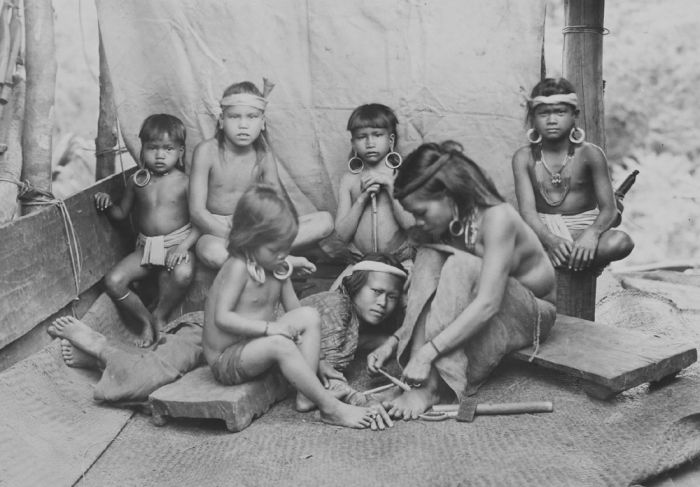
The process could take many months to complete, but for them it was worthwhile to withstand the pain, for the definition of beauty among the community at that time was to have a full set of tribal tattoos, and failure to undergo the experience would be deemed shameful.
This was confirmed by Prof Dr Ruslan Abdul Rahim from Universiti Teknologi Malaysia and Royer Wan from Tunku Abdul Rahman University College when they interviewed elderly Kayan women who still had their tribal tattoos as part of their research on meanings of polysemic Kayan symbols.
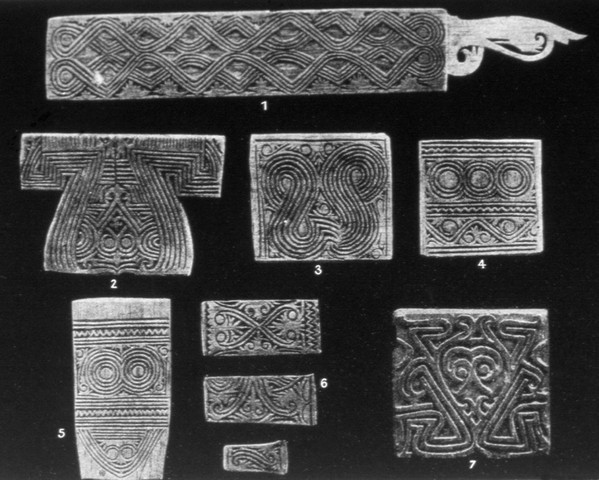
The interviewers discovered that the body marking process were performed by females only, and that an extremely talented tattooist would be favourable in the longhouse who could then demand a higher fee for her services.
“She too must possess the knowledge on which tattoo motif can be used for commoners, or serfs or the nobles. This is because the Kayans are a stratified ethnic group and the tattoos on the females must inform others about their social standing,” Prof Dr Ruslan and Mr Royer stated.
There was also an old Kayan belief that motifs which decorated a Kayan woman’s body would be torches that guide her in the afterlife, and without them would remain in the dark for eternity.

These traditional motifs, the researchers reviewed, were inspired by the nature that surrounded the Kayan community, as well as a way of recording their life, origins, social order, dietary, fishing technique, ancient belief systems and their understanding of the solar system and moon phases in relation to their agricultural activities – all meant to be handed down to the next generation to preserve.
Unfortunately, the interviewees told Prof Dr Ruslan and Mr Royer that Kayan’s traditional art of body marking were no longer practised, reiterating past accounts of studies from as early as the 1960s on this fading heritage.
There were several reasons to this – the Kayan tribal tattoos were no longer relevant to today’s world; prohibition by missionaries that discouraged the practices; and tattooists passed on without having any protégé to continue the art.
As a result, the elderly women that Prof Dr Ruslan and Mr Royer met are among the last generation to have these unique and meaningful tattoos, which calls for the need to document and decode them while they are still alive.
Doing so will allow artists to find inspiration in this body art to create meaningful creative work and educate the masses about the Kayan’s culture and heritage, subsequently ensuring their longevity for future generation.
Social Taboos of Traditional Kayan Tattoos
Like any other art of tribal tattoos, the Kayans had their own set of social taboos. For example, girls who wanted to be tattooed were not allowed to do so during menstruation, for it was believed that the flowing of blood attracted evil spirits.
These prohibitions were particularly applicable to the tattooist; disregarding them meant the designs that she marked would lack clarity in the afterworld, and she in turn would fall ill and lose her life.
According to tattoo anthropologist Lars Krutak, they include:
- Tattooists with young children were forbidden from performing the process; blood released during tattooing might attract evil spirits that could possess their offspring, leading to sickness or death
- No tattooing should take place during rice-seeding period, when there was an unburied dead person lying in the longhouse, or when the tattooist had a bad dream, for fear of interrupting the body marking process and ritual harmony of the home
- No bloody and raw meat or fish should be consumed by the tattooist, for evil spirits might possess her upon entering her food.