





Under Strategic Thrust One – Protecting Lives and Livelihoods – of the 2022 State Budget, RM91 million has been allocated for the provision of 24-hour electricity and treated water supply, especially in rural areas of Sarawak.
“In addition to this, Sarawak Water Supply Grid Programme for Stressed Areas and Rural Electrification Scheme will continue to be implemented next year (2022) under alternative funding with a provision of RM1.5 billion be made available,” says the Premier of Sarawak, YAB Datuk Patinggi Tan Sri (Dr) Abang Haji Abdul Rahman Zohari bin Tun Datuk Abang Haji Openg in his statement.
The allocation supports Sarawak’s ongoing efforts to achieve 100 per cent coverage of reliable electricity and clean water throughout the State by 2025.
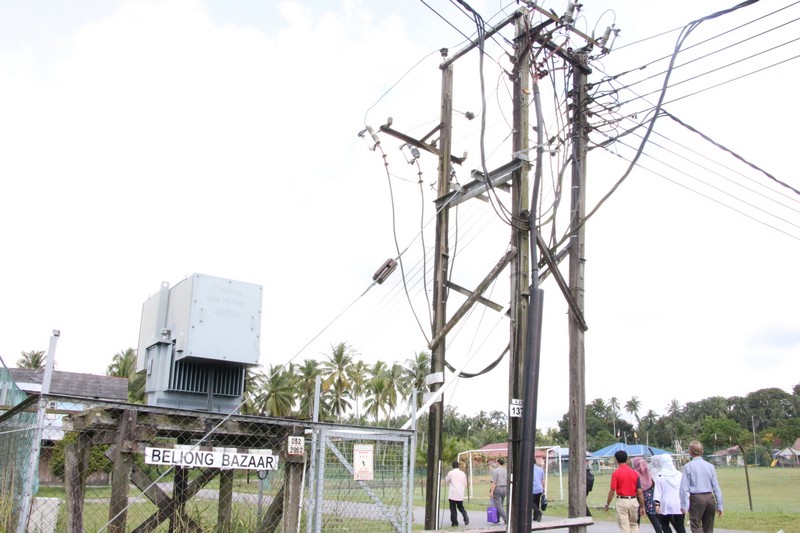
As of 2021, its overall coverage for electricity and water supply is at 98 per cent and 83.4 per cent, respectively, in which 95 per cent of rural areas fully electrified and only 66.5 per cent have access to clean water.
With nearly all of its urban population enjoying the benefits of these utilities, the Government, through the Ministry of Utility and Telecommunication (MUT) as well as its implementing agencies – i.e. Rural Water Supply Department (JBALB), Kuching Water Board, Sibu Water Board, LAKU Management Sdn Bhd and Sarawak Energy – endeavour to ensure similar provisions in rural areas.

As it seeks to narrow the urban-rural development gap in Sarawak, it believes immensely that quality public utility services can play a crucial role in expanding socio-economic opportunities in rural areas and essentially improve the well-being of the rural population.
To date, various short and long-term initiatives have been implemented to reach its target, whether through the Sarawak Accelerated Rural Electrification Master Plan or the Sarawak Water Supply Master Plan.

Apart from the aforementioned Rural Electrification Scheme and Sarawak Water Supply Grid Programme for Stressed Areas, the Government is carrying out other public utility projects such as the Rural Power Supply Scheme, Additional or Late Applicant Fund (ALAF), Sarawak Alternative Rural Electrification Scheme (SARES) and Sarawak Alternative Water Supply System (SAWAS).
The Challenges of Establishing Rural Utilities
Implementing public utility projects in rural Sarawak has its own complexities. Among the most common are vandalism and theft of utility facilities that can cause energy or communication disruption.
“Sarawak has a unique terrain. There are hills, rivers, jungles, and communities living in the remote areas, making logistics difficult.

“Transportation of heavy materials to the remote areas includes using longboats or barges and carrying by hand on foot. And when we overcome these challenges, there’s vandalism,” said Minister for Utility and Telecommunication YB Datuk Haji Julaihi Haji Narawi.
He added that Sarawak does not possess dedicated utility corridors along its road shoulders.
This, he noted, has been leading to difficulties in achieving project deadlines because utility companies are sometimes faced with problems between landowners, contractors or even authorities when laying or relocating utility construction materials such as cables and pipelines.
Constructing these corridors have been proposed by MUT as a long-term solution to better situate these necessaries and basically reduce these work interruptions – a future plan Datuk Haji Julaihi hoped could be realised.
“In the future, we are thinking of constructing utility corridors to allow placement of electric cables, pipelines, and other construction materials without any work interruptions by landowners, who sometimes disallow contractors to make use of their land to transport or place these utility construction materials.

“For areas that are going to have the utility infrastructures constructed in the area, first of all there should be an access road to the area.
“Then, you have the road shoulders on both sides of the road, where you could also find utility corridors at the end of the road to place the electric cables or any pipelines that need to be implemented by utilities suppliers either from Sarawak Energy, Rural Water Supply Department, or the Water Board,” he said.