




Over the last decade, halal tourism has become not only a tool to attract millions of visitors annually but also a catalyst for local product growth, particularly for halal-certified food, crafts, and culturally rooted souvenirs.
The Rise of Halal Tourism: A Global Trend
Halal tourism has evolved in response to the growing global Muslim population, projected to reach 2.8 billion by 2050, or roughly one-third of the world’s population. Muslim travellers are increasingly seeking destinations that do not just welcome them but also provide comprehensive halal amenities, such as halal-certified food, prayer facilities, and Muslim-friendly services. This demand has driven governments and tourism bodies worldwide to develop Muslim-friendly tourism and hospitality (MFTH) standards.

According to the Mastercard-CrescentRating Global Muslim Travel Index (GMTI) 2025, international Muslim arrivals reached 176 million in 2024, up 25 % from 2023, and are forecast to grow to 245 million by 2030, with total spending reaching an estimated USD 230 billion. This surge highlights a significant economic opportunity for destinations that can effectively cater to halal tourism needs.
Table 1: Global Muslim Travel Trends (2019–2030)
| Year | Estimated Muslim Tourist Arrivals | Projected Spending (USD) |
| 2019 | ~160 million | n/a |
| 2024 | ~176 million | ~$210 billion (est.) |
| 2030 | ~245 million (projected) | ~$230 billion (projected) |
Table 1 showcases the global Muslim travel growth and projected economic contribution from GMTI and market reports.
This growth benefits not only accommodation and travel services but also local product ecosystems, particularly halal food producers, artisanal goods makers, and souvenir industries, as Muslim travellers seek quality halal goods that reflect local culture.

Malaysia’s Position in Halal Tourism
Malaysia has consistently held a leading position in halal tourism, often outranking other destinations in global indices. For more than ten consecutive years, Malaysia has been ranked the Top Muslim-Friendly Destination in the GMTI, a testament to the country’s commitment to Muslim-friendly experiences, including halal food availability, prayer facilities, and culturally inclusive environments.
In 2024, Malaysia welcomed 4.82 million Muslim tourists who spent an estimated RM15 billion, up from 4.5 million visitors and approximately RM14.7 billion spent in 2023. Government projections suggest continued annual growth of around 1.2 % in Muslim tourism, underscoring its importance to the national tourism strategy.
Malaysia’s leadership is further strengthened by the Muslim-Friendly Tourism and Hospitality Assurance and Recognition (MFAR) programme, introduced in 2018, which assures that hotels and tourism services meet specific halal-friendly criteria, such as availability of halal food, prayer spaces, and Muslim-centric service practices.
Halal Tourism and Local Product Development
Halal tourism plays a significant role in stimulating demand for local halal products. As Muslim tourists seek authentic experiences, local producers are incentivised to innovate and elevate product quality, particularly in food, beverages, and cultural souvenirs that reflect both halal compliance and local heritage. In Malaysia’s context, the strong reputation for halal food has also supported domestic and export markets for halal-certified products such as ready-to-eat foods, snacks, and beverages.
Academic research highlights how gastronomy tourism, when aligned with halal tourism, creates opportunities for local cuisine to become a tourism product itself. For example, studies on local cultural foods, such as Baba Nyonya cuisines, illustrate both the challenges and possibilities of expanding halal-certified offerings to Muslim tourists while preserving local taste identities.
Local producers who obtain halal certification can tap into both tourism and export markets, creating jobs, increasing incomes, and establishing global linkages. As destinations grow their Muslim tourist arrivals, local supply chains, including halal agriculture, food processing, packaging, and creative products, become more competitive and embedded into international value chains.
Halal Tourism in Sarawak
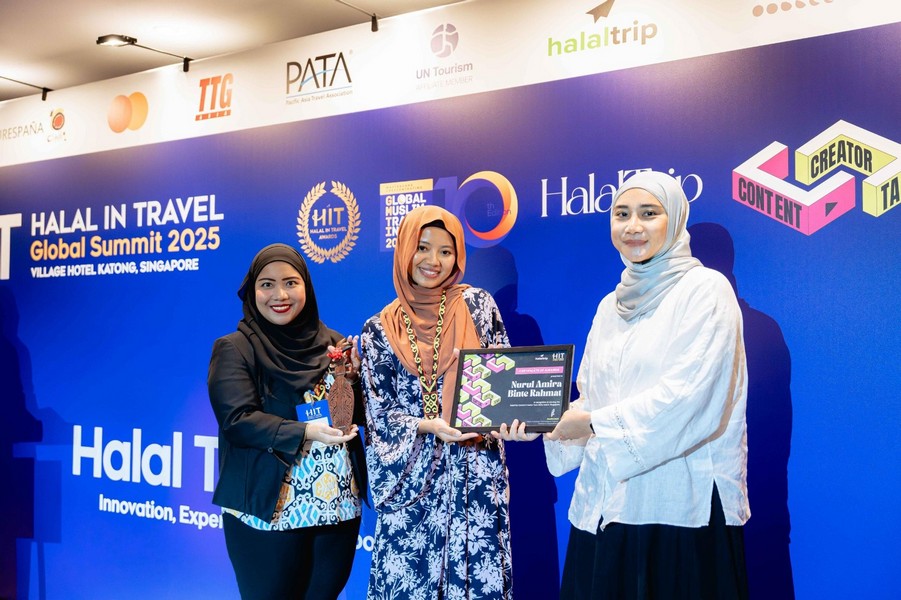
Sarawak, one of Malaysia’s most culturally diverse states, is increasingly positioning itself as a halal tourism hub. Partnerships between organisations such as Statos and HalalTrip promote Muslim-friendly travel experiences that showcase Sarawak’s halal dining, prayer facilities, and culturally rich attractions to regional markets like Singapore. Such collaborations help local businesses access broader tourism demand and expose local halal product offerings to international audiences.
Sarawak’s strategy integrates halal tourism with local food culture, religious sites, and community-based tourism. By doing so, it supports local halal product makers from food artisans to souvenir producers, making their goods an integral part of visitor experiences.
Institutional and Policy Enablers
Islamic Tourism Centre (ITC)
The Islamic Tourism Centre (ITC) under Malaysia’s Ministry of Tourism, Arts and Culture is the central body for developing and promoting Muslim-friendly tourism. ITC offers research, standards, training, and market intelligence to help destinations improve halal tourism infrastructure from accommodations to halal food certification, making the industry more attractive and accessible to Muslim travellers globally.
Halal Certification Bodies
While halal tourism encompasses services, the halal certification system for products governed by bodies such as the Department of Islamic Development Malaysia (JAKIM) plays a key supporting role. Certified local products gain credibility among Muslim consumers and travellers alike, driving demand and enabling local producers to compete in both domestic and global markets.
Economic and Cultural Impacts
The economic effects of halal tourism reach beyond direct tourism receipts. When tourists purchase local halal foods, drinks, and souvenirs, demand for value-added local products increases. This spillover effect encourages investment in quality improvement, certification, branding, and distribution channels, which benefits SME producers and strengthens regional economies.
Cultural preservation is another key benefit. Halal tourism encourages the marketing of food rooted in local traditions, giving producers both a platform and incentive to maintain culinary heritage in halal-certified forms.
Key Statistical Summary
Table 2: Muslim Tourism Contribution to Malaysian Economy (2023–2025)
| Metric | 2023 | 2024 | Projected 2025 |
| Muslim tourist arrivals (million) | 4.5 | 4.82 | ~5.0+ |
| Estimated total spending (RM billion) | 14.7 | 15 | ~16+ |
| Malaysia GMTI ranking | #1 | #1 | #1 |
Table 2 states the Malaysia’s Muslim tourism growth and economic contributions based on official tourism reports and GMTI standings.
Halal tourism is more than a niche travel sector. It is a strategic economic catalyst that stimulates local product growth, strengthens SME competitiveness, and reinforces cultural identities. Countries like Malaysia and regions like Sarawak demonstrate how investment in Muslim-friendly tourism infrastructure, standards, and marketing can directly benefit local producers and expand their access to both domestic and international markets.
As the global Muslim travel market continues to grow, empowered by rising spending power and travel accessibility, halal tourism stands out as a significant engine for inclusive, sustainable local economic development.
References
- https://dewanmasyarakat.jendeladbp.my/2024/04/26/21720/
- https://www.theborneopost.com/2025/07/23/statos-partners-with-halaltrip-to-promote-muslim-friendly-travel-experiences-in-sarawak/
- https://www.theborneopost.com/2025/08/04/sarawak-strengthens-halal-ecosystem-with-technical-audit-training/
- https://journal.unisza.edu.my/apj/index.php/apj/article/view/659
- https://hh-publisher.com/ojs321/index.php/JHIS/article/view/1026
- https://www.itc.gov.my/an-inclusive-tourist-destination/
- https://www.itc.gov.my/an-inclusive-tourist-destination/
- https://www.halaltrip.com/other/blog/kuching-unesco-gastronomy-city-halal-food
- https://ojs.amhinternational.com/index.php/imbr/article/view/3966
- https://spaj.ukm.my/ajehh/index.php/ajehh/article/view/271
- https://www.halaltimes.com/malaysia-becomes-top-destination-muslim-tourists/
- https://ojs.amhinternational.com/index.php/imbr/article/view/3966
- https://www.thestar.com.my/news/nation/2025/01/22/malaysia-to-capture-major-share-of-islamic-tourism-by-2028