

Just innews timeline
- 1 day ago
- 2 days ago
- 3 days ago
- 4 days ago
- 5 days ago
- 6 days ago
- 1 week ago
- 1 week ago
- 1 week ago
- 1 week ago
- Advertisement -
Recent Articles
Galeri Foto | Photo Gallery

Mobile Banking Empowers Remote Communities
Mobile banking units in Sarawak bring essential financial services to remote communities. Equipped with onboard cash machines, these specialized vehicles bridge geographical divides, granting isolated populations direct access to automated teller machines, account services, and vital government financial aid distribution.
Dari RAKAN Sarawak
Sarawak Tourism Charts Resilient Future
Sarawak tourism enters 2026 with strong recovery momentum and clear 2026 to 2028 potential. Arrivals and receipts are rising across key markets. The state prioritises sustainability, digitalisation, community benefits and business events. These priorities aim to secure resilient, inclusive growth.
Galeri Foto | Photo Gallery
Sarawak Bolsters Food Security Framework
A local farmer inspects a fresh bundle of water spinach in Sarawak, symbolising crucial grassroots food security efforts. The state faces significant challenges, with rice self-sufficiency around 21 per cent and a food trade deficit of RM6.64 billion in 2025.
Dari RAKAN Sarawak
Sarawak Transport Budget Draws Scrutiny
Budget 2027 backed RM15.091 billion revenue and a RM246 million surplus. KUTS Phase 1 stood at 49% actual against 53% planned by September 2026. Road accidents reached 16,776 from January to September 2026. Aircraft movements hit 93,798 in Q3 2026.
Galeri Foto | Photo Gallery
Sarawak Bamboo Industry Unlocks Growth
Bamboo offers immense economic potential for Sarawak, providing a renewable resource for sustainable green industries and rural development. Local cultivation initiatives, such as the Sabal bamboo pilot project, demonstrate strong survival rates and high-yield adaptability across native and commercial species. Expanding this sector can significantly boost local manufacturing, create green jobs, and increase export revenues for the region. Strategic investments in modern processing facilities will help transform raw culms into high-value commercial goods.
Dari RAKAN Sarawak

Faster Worker Approvals
ILMU cut foreign worker processing from 80 to 43 days, beating the 61-day benchmark by 18 days.

discover
Infographic
Explore more articles

Dari RAKAN Sarawak
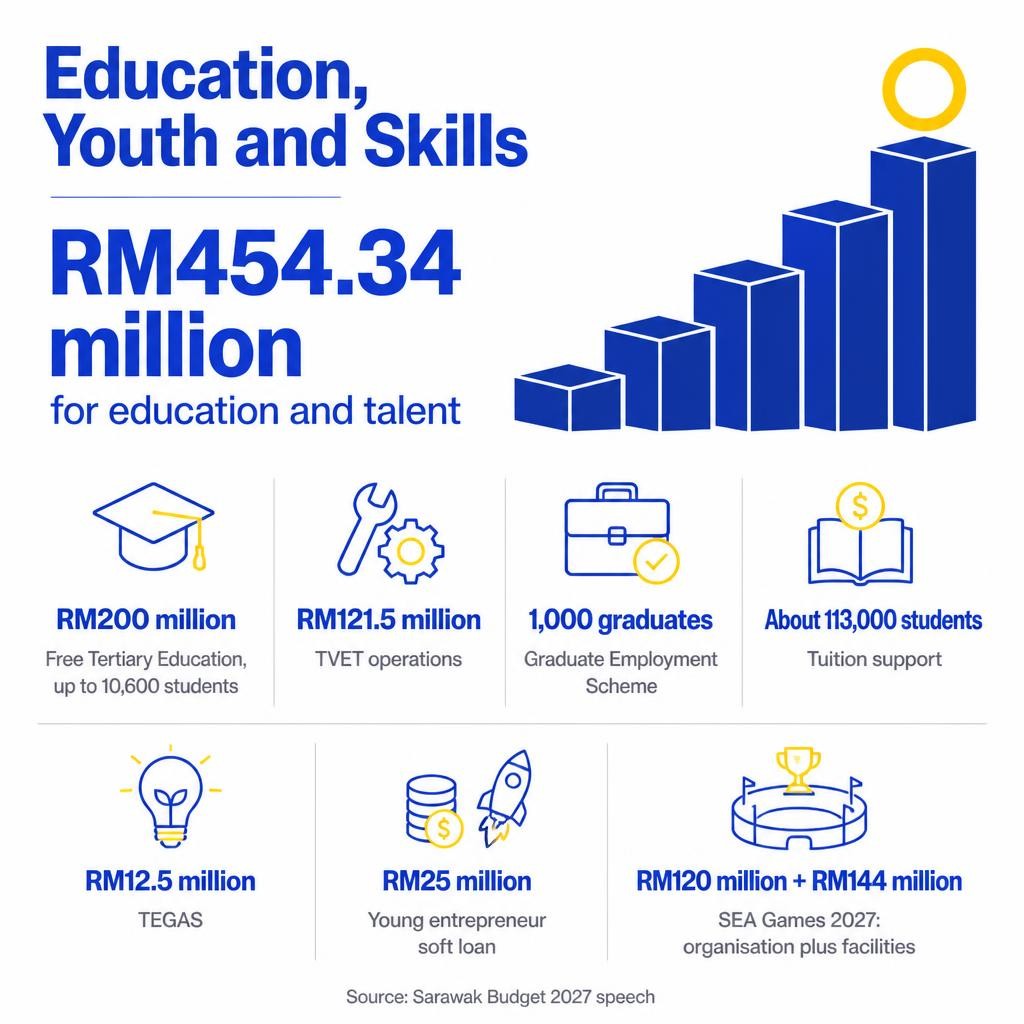
Sarawak’s Free Tuition Model Needs a Broader Sustainability Vision
Sarawak's FTES offers targeted tuition and living stipends for strategic degrees, but its STEM-heavy focus overlooks rural needs. True sustainability requires expanding support to include community development, indigenous studies, and agribusiness, building both industrial capacity and enduring social resilience.
Dari RAKAN Sarawak
Commemorate Sarawak Day
Sarawak Day’s true meaning is not mere celebration but actively fulfilling self-government and MA63 rights. Every citizen must prioritize constitutional autonomy, support local businesses, preserve indigenous languages and culture, and protect the environment daily, creating a truly self-reliant, united Sarawak.
Berita dari Putrajaya
Relentless Improvement Drives Better Service
Malaysia's Reformasi Kerenah Birokrasi (RKB) reform slashed red tape, with 323 completed projects saving RM2.01 billion. AI approves fire plans in a day; land approvals now take 3 months. This leapfrogged competitiveness ranking from 34th to 15th, aligning with SDG and ESG goals.
Dari RAKAN Sarawak
Digital Sovereignty and Citizen Protection
Malaysia's Dewan Rakyat passed the Cyber Security Bill 2026, replacing outdated laws to combat surging cybercrime. While hailed as a game-changer, fierce debate exposed tensions over warrantless surveillance, privacy intrusions, and protecting fundamental rights versus enforcement needs.
Dari RAKAN Sarawak
A Bridge Is Only the Beginning
The bridge is an engineering triumph, yet its legacy depends not on concrete but on cultivating human capital, ensuring capital access, and bridging the digital divide to transform rural livelihoods beyond mere connectivity.
Dari RAKAN Sarawak
Uniting Diversity, Enriching Lives Through Sarawak’s Vibrant Arts
Grounded in the Premier's directive to unite diversity, Majlis Seni Sarawak harnesses the arts as a unifying force. Through festivals and cultural programmes, it bridges ethnic divides, fostering social cohesion and reinforcing Sarawak’s shared identity of solidarity and racial harmony.