




In a state as geographically diverse and expansive as Sarawak, delivering timely and quality healthcare to rural populations has long posed a significant challenge. The remoteness of some areas, combined with logistical difficulties such as limited road access and scattered settlements, often results in healthcare inequity. However, telemedicine a healthcare practice that uses telecommunications to provide clinical services remotely is changing that narrative.
What Is Telemedicine?
Telemedicine refers to the delivery of healthcare services through digital and communication technologies, especially for patients who are geographically distant from healthcare providers. It includes video consultations, remote monitoring, and mobile health applications. In Sarawak, where hundreds of villages lie hours away from the nearest hospital, telemedicine presents a viable, cost-effective, and timely solution to address healthcare accessibility gaps.
Why the Issue Exists
Rural Sarawak suffers from a limited number of medical professionals per capita, especially specialists. Many clinics are understaffed and under-equipped, often operating with only one medical assistant. These facilities may lack advanced diagnostic tools or emergency capabilities. With over 270 government clinics scattered across Sarawak – some in extremely isolated locations – the cost and difficulty of physically reaching each one regularly pose a massive administrative and financial burden to the healthcare system.
Additionally, patients often forgo treatment due to high travel costs, poor road conditions, or lack of transportation. These barriers disproportionately affect vulnerable groups, especially the elderly, indigenous communities, and people with chronic conditions who require regular follow-up.
Current Telemedicine Initiatives in Sarawak
The Sarawak government has actively embraced telemedicine as a core component of its digital healthcare agenda. Through agencies like Sarawak Multimedia Authority (SMA) and partnerships with institutions such as UNIMAS and the Ministry of Health Malaysia, pilot projects have been introduced to assess viability in rural zones.
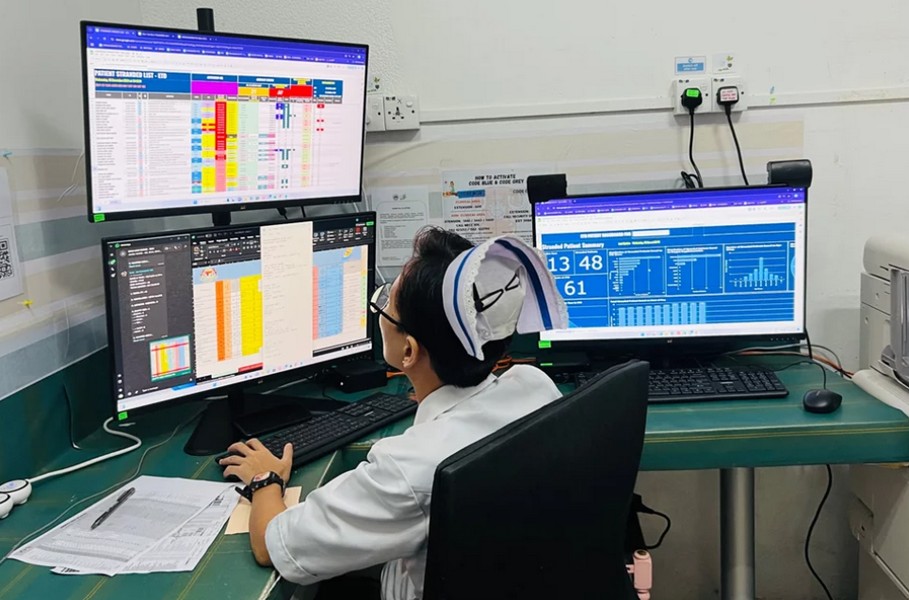
One such initiative is the telemedicine service at Klinik Kesihatan Long Bedian in Baram, where patients now consult specialists in Miri or Kuching via video conferencing, reducing the need for long travel. In another case, digital stethoscopes and ECG devices connected to cloud-based systems allow real-time remote diagnostics. The Sarawak General Hospital (SGH) has also begun integrating remote diagnostics into its outreach clinics to manage follow-up care virtually.
| Barrier | Impact |
| Geographical remoteness | Delays in medical attention and referrals |
| Shortage of specialists | Limited expertise for chronic or complex health conditions |
| Poor road infrastructure | Travel time to hospitals exceeds 4–6 hours |
| High transport costs | Discourages early or preventive treatment |
Table 1 showcases the Healthcare Accessibility Barriers in Rural Sarawak
Response and Implementation Process
To resolve these challenges, a multi-pronged approach is being implemented. First, the Sarawak Digital Economy Strategy outlines a digital health plan, incorporating broadband expansion in rural areas and mobile clinics equipped with telehealth devices. Collaborations with UNIMAS and various health-tech startups have also allowed for testing of AI-powered diagnostics and mobile health record systems.
In terms of process, the implementation begins with site feasibility studies, followed by the installation of communication infrastructure (such as VSAT for satellite internet). Training sessions are conducted for local medical assistants and community health volunteers to operate the systems. Patient records are digitized and integrated with hospital databases to ensure continuity of care. All of this is supported by policy and funding from both state and federal levels.
Who Is Involved?
Stakeholders include the Sarawak State Government, Ministry of Health Malaysia, UNIMAS, the Sarawak Multimedia Authority, local hospitals, rural clinics, and technology providers. International agencies such as the World Health Organization (WHO) have also provided frameworks for rural telemedicine deployment, which are partially adapted in Sarawak’s context.

Benefits to Stakeholders
Patients benefit from earlier diagnoses and reduced travel burdens. Healthcare professionals can manage larger caseloads more efficiently, with support from specialists in major hospitals. Government agencies reduce long-term costs by minimizing the need for physical expansion. Academic institutions gain research data, while tech providers can refine their systems in a real-world, high-impact setting.
Table 2: Key Benefits of Telemedicine Implementation
| Stakeholder | Benefit |
| Rural Patients | Faster diagnosis, lower costs, less travel |
| Medical Practitioners | Support from specialists, reduced burnout |
| Government Agencies | Cost-effective healthcare delivery |
| Tech Providers | Real-world testing and deployment opportunities |
| Universities | Data for public health research and technology innovation |
Table 2 shows the Key Benefits of Telemedicine Implementation
Improvements to Be Made
Despite encouraging results, some gaps remain. Internet connectivity remains unstable in ultra-remote zones. Not all clinics are equipped with compatible hardware or trained staff. Moreover, data privacy and consent mechanisms are still evolving. To enhance implementation, further investment is required in solar-powered communication systems, local capacity-building, and digital literacy programs for rural communities.
Telemedicine in Sarawak is no longer an abstract concept—it is a tested, evolving, and increasingly essential tool for equitable healthcare delivery. While there is still ground to cover, the transformation has begun. With strong political will, technological innovation, and cross-sector collaboration, Sarawak may well become a model for rural telehealth implementation in Southeast Asia.
References:
- https://www.sarawaktribune.com/sarawak-pioneers-healthcare-transformation-with-telemedicine-and-innovation/
- https://www.theborneopost.com/2024/07/09/deputy-premier-over-half-of-271-public-health-clinics-in-sarawak-to-undergo-digitalisation/
- https://gazette.unimas.my/2024/12/19/digital-innovation-in-action-unimas-and-sgh-enhance-patient-care-with-new-dashboard/
- https://www.sarawaktribune.com/quality-healthcare-through-use-of-latest-technology/
- https://www.sarawaktribune.com/health-centre-potential-pioneer-in-applying-digital-technologies/
- https://www.sarawaktribune.com/rm10-mln-to-develop-digital-application-for-sarawak-hospitals/
- https://www.dayakdaily.com/sarawak-to-strengthen-digital-healthcare-system-through-telemedicine-initiative/
- https://www.bernama.com/en/news.php?id=2278913