



In 2024 alone, firefighters across Malaysia respond to an average of 113 emergency calls, with Sarawak’s Fire and Rescue Department handling approximately six calls daily—amounting to 2,176 cases.
A recent interview with RAKAN Sarawak revealed rescue operations as the most frequent emergency handled by Sarawak’s firefighters among the many duties they undertake, averaging 7,785 cases annually between 2021 and 2024, with fire casescontributing to an estimated RM199.9 million in property losses last year.
Sarawak firefighters’ responsibilities extend far beyond extinguishing flames; they span from responding to hazardous material leaks to emergency medical assistance, vehicle accident rescues, and large-scale disaster response.

Even search-and-rescue operations during floods and mountain emergencies are part of their extensive service portfolio.
In January 2025, one of the most severe disasters in recent history struck Bintulu, when relentless rainfall over three days triggered devastating flash floods. River levels surged unexpectedly, submerging homes, businesses, and even petrochemical plants. With over 1,900 residents evacuated, emergency response efforts required swift water rescues, drone-assisted area assessments, and the rapid deployment of additional personnel and equipment.
The crisis highlighted the pressing need for improved flood management infrastructure in the region.
As Sarawak faces increasing climate-driven disasters, the role of firefighters in emergency response has never been more critical.
This article will explore how Sarawak’s firefighters train for these emergencies, the specialised equipment they rely on, and the crisis response procedures that guide their operations.
The Roles of Firefighters: Beyond Firefighting
Firefighting is just one facet of the responsibilities carried out by the Fire and Rescue Department Malaysia (FRDM). Their core duties encompass fire prevention, rescue operations, and crisis management, making them one of Malaysia’s most versatile emergency response agencies.

1. Fire Prevention and Suppression
FRDM’s primary role remains fire suppression and prevention—a responsibility that extends from frontline firefighting to enforcing fire safety regulations. The Operations Division handles active firefighting, deploying teams to extinguish blazes in residential, commercial, and industrial areas. Meanwhile, the Fire Safety Division focuses on preventive measures, such as conducting building inspections, enforcing fire safety codes, and ensuring fire hazards are minimised.

A crucial part of their fire prevention strategy includes ensuring buildings have adequate fire escape routes. This involves regulating, maintaining, and certifying fire escapes in public and private premises to guarantee safe evacuation during emergencies. Buildings that meet safety standards are issued Fire Certificates, signifying compliance with their stringent fire safety regulations.
2. Rescue Operations and Emergency Response
Firefighting in Sarawak has evolved significantly from its traditional role of fire suppression and prevention to encompass a wide range of emergency response duties, including rescuing lives and property in a range of calamities, ranging from vehicular accidents to search and rescue efforts during natural disasters.
One of their lesser-known roles is their post-fire investigation responsibilities. The Fire Investigation Division conducts thorough examinations into the cause, origin, and circumstances of fire incidents. These findings play a critical role in developing stronger fire prevention policies and holding responsible parties accountable for fire safety negligence.
Standard Procedures of Operation: Ensuring Efficiency in Emergency Response
Firefighters operate under strictly defined procedures to ensure rapid, coordinated, and effective responses to various emergencies. These protocols are designed to minimise damage, save lives, and enhance safety for both victims and responders.
Below are the standard operating procedures (SOPs) for different types of emergencies in Sarawak:
1. Fire Emergencies: Structural, Industrial & Wildfire
Fire incidents vary in scale, intensity, and type, requiring different suppression techniques. The approach differs for urban structural fires, industrial fires, and wildfires.
2. Flood & Water Rescues
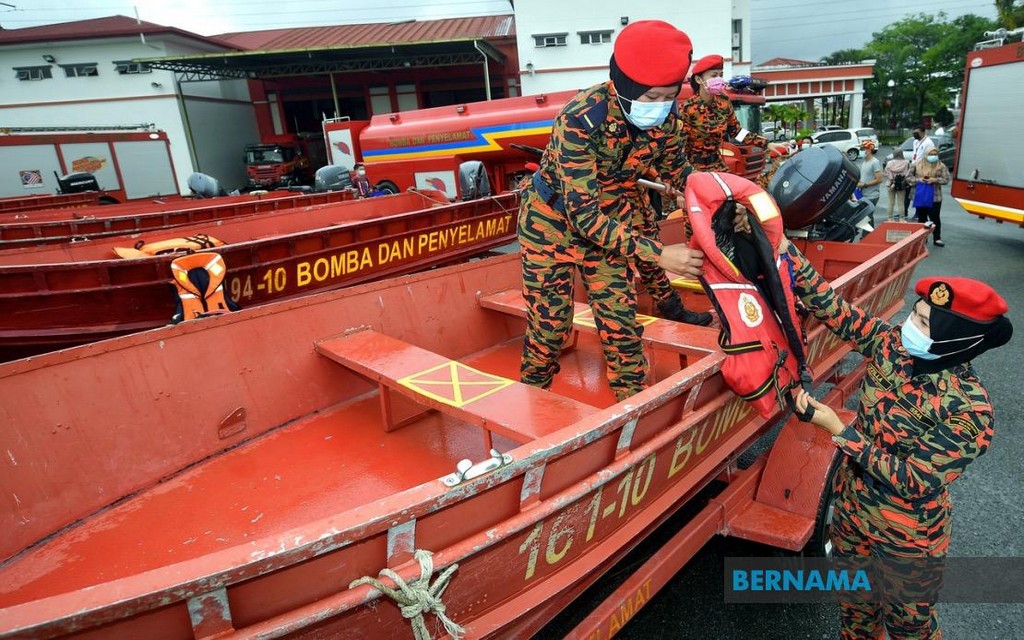
Sarawak’s frequent flooding and riverine geography make water rescue operations essential. Flood rescues are often conducted in rural and low-lying areas, requiring careful assessment and coordination.

3. Hazardous Material (HAZMAT) Incidents
Sarawak’s oil and gas industries, industrial zones, and chemical storage facilities present high risks for HAZMAT incidents. These emergencies require specialised containment procedures to protect people and the environment.

4. Road Accidents & Vehicle Extraction
Sarawak’s long highways, mountainous roads, and dense traffic in urban centres make road accidents a common emergency, playing a crucial role in securing accident scenes and extracting victims.
5. Fire & Hazard Prevention in Collapsed Buildings & Structural Rescues
Collapsing buildings from earthquakes, landslides, or construction failures pose severe safety risks. Firefighters conduct search-and-rescue operations while ensuring structural stability.

6. Medical & Cardiac Emergencies
Firefighters are trained in emergency medical response and often arrive before ambulances in life-threatening situations.
FRDM operates under rigorous procedures to maximise efficiency and safety in every emergency. Given Sarawak’s geographical challenges, industrial presence, and disaster risks, firefighters must adapt their response strategies based on the nature of the crisis.

Training Regime of New Firefighters
Before deployment, new firefighters undergo rigorous training at the Fire & Rescue Academy, lasting between six to twelve months, depending on their experience levels. This intensive training ensures they are fully prepared for real-life emergencies.
Physical Fitness & Endurance Training
Firefighting requires peak physical conditioning. Recruits engage in:
- Intensive strength and endurance training to withstand extreme conditions.
- Running, stair climbing, obstacle courses, and weightlifting to build stamina.
- Fireground drills while wearing protective gear weighing 20-30kg.
Fire Suppression Techniques
Training takes place in live fire simulation facilities, covering:
- Fire behaviour and suppression methods, using water, foam, dry chemicals, and CO2.
Hose handling and pump operation to control water pressure and direct fire streams. - Ventilation techniques, such as positive pressure ventilation (PPV) to clear smoke.
- Wildfire suppression, including creating firebreaks and aerial firefighting techniques.

Search & Rescue (SAR) Operations
Rescue missions are an integral part of a firefighter’s duties. Training includes:
- High-rise rescue drills using ropes and ladders for victim evacuation.
- Forcible entry techniques, such as breaking doors and cutting through debris.
- Self-contained breathing apparatus (SCBA) training for navigating smoke-filled environments.
Emergency Medical Response (First Aid & CPR)
Since firefighters often arrive first at emergency scenes, they receive:
- Basic Life Support (BLS) training, including CPR, AED (defibrillator) use, and trauma care.
- Training in handling burns, fractures, and severe bleeding.
- Coordination with paramedics and hospitals for medical emergencies.

Hazardous Materials (HAZMAT) Training
To handle hazardous situations safely, firefighters train in:
- Identifying and containing toxic chemicals and gas leaks.
- Decontamination procedures to ensure public and firefighter safety.
- Using HAZMAT suits and breathing apparatus in hazardous environments.
Fire Investigation & Prevention
Preventing fires is as crucial as extinguishing them. Training covers:
- Fire causes, arson detection, and electrical fire risk assessment.
- Conducting fire risk assessments and public fire safety education campaigns.
Vehicle & Road Accident Response (Extrication Techniques)
Firefighters often respond to road accidents, requiring training in:
- Using the Jaws of Life hydraulic rescue tools for car crash victims.
- Safe extrication techniques to prevent further injuries.
- Handling vehicle fires and fuel spills.

Disaster Response & Team Coordination
Firefighters must be prepared for large-scale emergencies, including:
- Flood, earthquake, and landslide rescue operations using boats and specialised equipment.
- Urban search and rescue (USAR) missions, utilising K9 search units and drones.
Specialised Skills for Firefighters in Sarawak
The unique geographical and environmental landscape of Sarawak presents additional challenges that require specialised expertise and adaptability from its firefighters. The state’s vast rainforests, mountainous landscapes, remote rural settlements, and natural disasters—such as floods and peat fires—necessitate advanced training, specialised equipment, and strong inter-agency coordination. Skills vary by division and include:
- Jungle navigation and portable pump usage for remote firefighting.
- Thermal imaging for detecting underground peat fires.
- Strong swimming skills for flood and swift water rescues.
- Boat handling for monsoon-related emergencies.
- Rope techniques and helicopter rescues for remote areas.
- Longhouse fire safety and evacuation planning.
- HAZMAT response for industrial hazards.
- Cave rescues and confined space operations.
- Wildlife handling for encounters with dangerous animals like crocodiles and snakes.
- Cross-border emergency response with Indonesia for forest fires and disaster relief.
MOSCAR (Mountain Cave Search and Rescue)
A specialised SAR unit trained for high-risk operations in mountainous, cave, and jungle areas.
- High-Angle & Rope Rescue: Cliffside rescues, rope systems, pulley techniques, and hiker evacuation.
- Cave Search & Rescue (CSR): Navigating narrow cave systems, underground water rescues, air quality monitoring, and confined space operations.
- Key Operations: Mount Kinabalu and Batu Lawi rescues, Mulu Caves extractions, landslide recovery in rural areas, and jungle expeditions.
STORM Unit (Special Tactical Operation and Rescue Team)
An elite unit specialising in high-risk search and rescue during natural disasters and extreme weather events.
- Urban Search & Rescue (USAR): Rescuing victims from collapsed buildings and landslides using seismic detectors, K9 rescue dogs, and heavy machinery.
- Jungle & Mountain Rescues: Working with MOSCAR to handle missing hikers and remote rescues, specialising in rope rescue for deep ravines and cliffs, survival in extreme conditions, and drone-assisted navigation.
- Helicopter & Air Rescue: Coordinating air rescues for flood victims, injured individuals, and large-scale disaster responses.

BOMBA Malaysia Drone Unit
A specialised division using UAVs for search and rescue, disaster response, and fire surveillance:
- Search & Rescue Operations: Conducting aerial searches in forests, mountains, and flood zones using infrared cameras to detect lost individuals.
- Firefighting & Hotspot Detection: Monitoring fire spread in peatlands, forests, and industrial zones, providing real-time mapping for suppression teams.
This extensive training and specialisation ensure Sarawak’s firefighters are equipped to handle the region’s unique challenges, protecting lives and property with skill and efficiency.
Specialised Equipment and Technology of Firefighters
To effectively respond to various emergencies, Sarawak’s firefighters are equipped with essential firefighting technology and specialised equipment. From fire engines to hazardous materials (HAZMAT) response tools, these innovations enhance the efficiency, safety, and effectiveness of firefighting operations across Sarawak.
Fire Rescue Tender (FRT): The Backbone of Firefighting Operations
The Fire Rescue Tender (FRT) is the primary emergency response vehicle, serving as a multi-purpose unit for fire suppression, rescue, and life-saving missions. It is built to handle a variety of urban, industrial, and rural emergencies. Key features of the FRT include:
- Water & Foam Fire Suppression System: Equipped with a water tank capacity ranging from 1,800 to 4,500 litres, along with a foam tank containing aqueous film-forming foam (AFFF) for extinguishing oil and chemical fires. The system also includes a high-pressure pump and a fire monitor (water cannon) for powerful fire suppression.
- Hydraulic Rescue Tools (Jaws of Life): A critical set of equipment that includes cutters, spreaders, and rams to extricate victims from wrecked vehicles, cut through metal, pry open doors, and remove heavy debris.
- Firefighter Equipment Storage: Houses essential protective gear such as self-contained breathing apparatus (SCBA), firefighting suits, helmets, gloves, and tools like axes, crowbars, and saws for forced entry and search-and-rescue operations.
HAZMAT Equipment: Responding to Chemical and Radiological Threats
For incidents involving hazardous materials, the HAZMAT units are trained and equipped with advanced detection, containment, and neutralisation tools to manage chemical, biological, radiological, and nuclear (CBRN) threats. Specialised HAZMAT equipment includes:
- Personal Protective Equipment (PPE):
- Level A Suits: Fully encapsulated, gas-tight suits for extreme toxic environments.
- Level B Suits: Chemical-resistant suits with SCBA for high-risk operations.
- Level C Suits: Lighter chemical-resistant clothing for lower-risk situations.
- All suits come with neoprene, nitrile, or butyl rubber gloves and boots for maximum chemical resistance.
- Self-Contained Breathing Apparatus (SCBA): Provides clean, breathable air for up to 60 minutes in toxic environments such as industrial fires and gas leaks.
- Gas & Radiation Detectors: Includes multi-gas detectors, radiation monitors, and photoionisation detectors for identifying harmful substances in chemical spills, nuclear accidents, and industrial gas leaks.
- Decontamination Equipment: Consists of portable decontamination showers, neutralising agents, and absorbent materials to safely contain and clean up hazardous spills.
- Containment & Leak Control Tools: Includes plugging and patching kits, chemical-resistant hoses, and overpack drums to contain leaks from oil spills, tanker accidents, and chemical factory incidents.
With these specialised technologies and equipment, firefighters continue to enhance their emergency response capabilities, ensuring the safety of Sarawakian communities.
The Unwavering Commitment of Sarawak’s Firefighters
Firefighters in Sarawak operate under some of the most challenging conditions in Malaysia, facing vast geographical barriers, unpredictable climate extremes, and resource limitations.
Despite these hurdles, their unwavering commitment to protecting lives and property remains evident in their continuous adaptation, rigorous training, and innovative approaches to emergency response.
Through strategic initiatives like the Bomba Komuniti program and the adoption of advanced firefighting technologies, Sarawak’s fire services are gradually improving their response capabilities in remote and rural regions.
With sustained efforts in training and infrastructure development, the state’s firefighters will continue to stand resilient against evolving challenges, embodying their core philosophy: to save and serve, no matter the odds.