




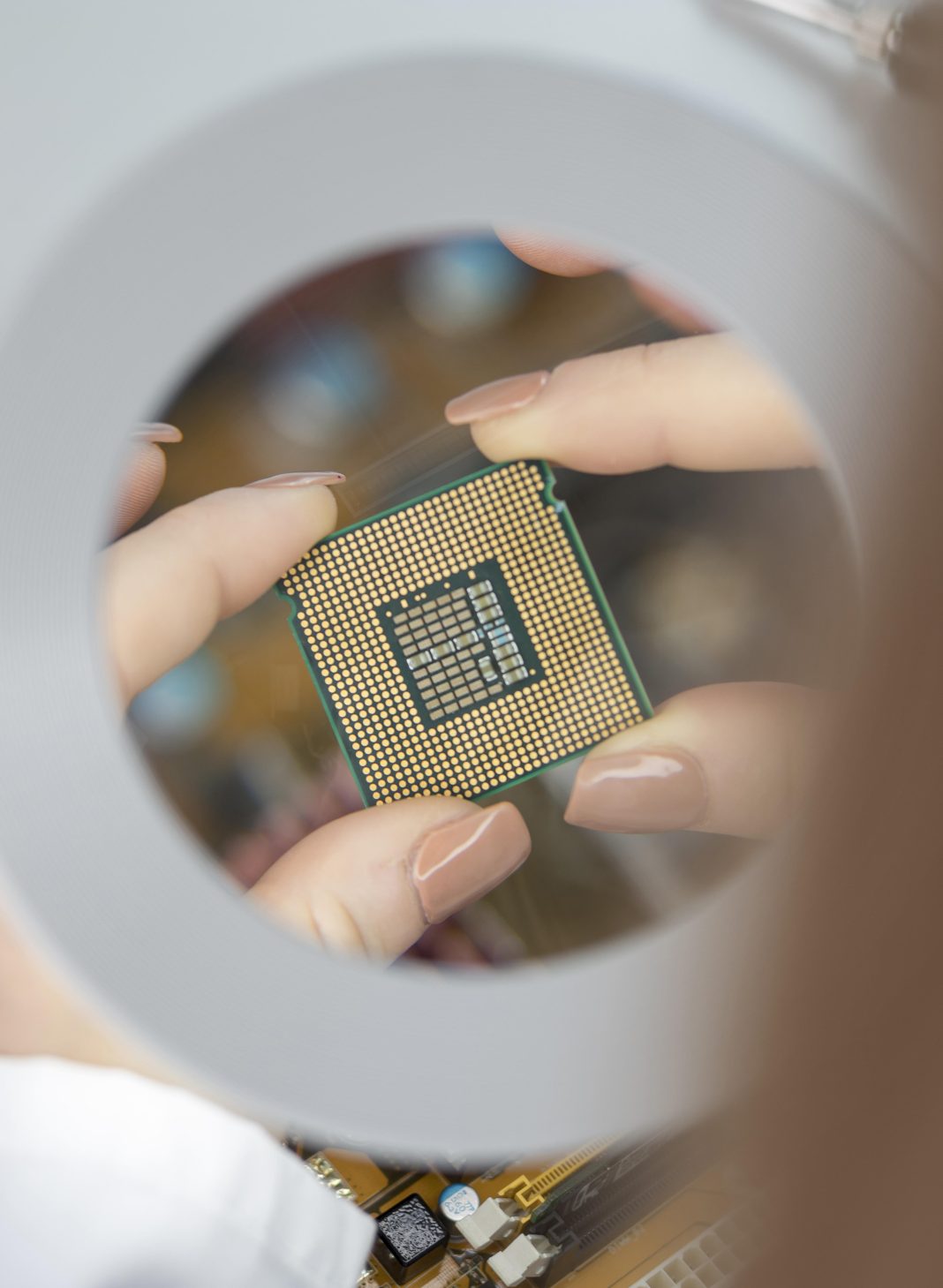
The launch of Sarawak’s first homegrown Gallium Nitride (GaN) semiconductor chip via the keteq.GaN and keteq.ai platforms represent more than a technical milestone—it signals a transformation in the state’s economic direction.
Once recognised mainly for hydropower, timber, and energy exports, the state is now stepping into the global arena of advanced power electronics.
The state’s government explains that the keteq.GaN chip merges GaN power devices with AI-driven control systems, forming a cornerstone for future microgrids, converters, and sustainable energy applications.
What is Gallium Nitride (GaN)?
Gallium Nitride (GaN) is a wide-bandgap semiconductor capable of withstanding higher voltages, temperatures, and switching speeds than conventional silicon.
This means devices lose far less energy, making GaN perfect for everything from fast charges and electric cars to 5G networks and aerospace technology.
Researchers worldwide note that GaN transistors offer lower resistance, improved efficiency, and reduced heat generation—benefits that are increasingly critical in an era of electrification and digitalisation.
These material properties enable more compact, lighter, and energy-efficient power converters, crucial for modern AI-driven technologies.
Why GaN Outperforms Traditional Silicon
For decades, silicon has been the backbone of the global semiconductor industry.
However, it is approaching its physical constraints as demands for compact, high-performance electronics rise.
Gallium Nitride (GaN) offers several advantages: it switches faster, allowing higher power density; generates less heat, reducing cooling requirements; tolerates higher temperatures and frequencies, making it ideal for RF, radar, and high-speed power electronics; and can shrink chargers and converters by over 50% while improving efficiency.
These advantages are fuelling rapid global market growth and attracting investment from major semiconductor companies.
But, despite its advantages, GaN is not without limitations.
Mass production is still costly, packaging and thermal management are challenging, and long-term reliability data are limited.
Consequently, silicon remains the preferred option for low-voltage, consumer-level devices, benefiting from decades of industrial refinement and cost efficiency.
The Pros and Cons of GaN Technology
For Sarawak’s keteq.ai system, the advantages of GaN are clear: greater efficiency, lower energy loss, more compact designs, and reduced cooling needs.
These benefits translate into tangible cost savings for both industrial operators and consumers, particularly in microgrids and renewable-energy setups where every watt matters.
However, the challenges cannot be overlooked.
It demands expert knowledge, high-grade wafers, and sophisticated packaging.
Even companies such as Infineon have only just recently adopted 300 mm wafer production to optimise cost and yield, requiring considerable R&D and supply-chain coordination.
Sarawak’s GaN breakthrough is a milestone, but it’s just the opening chapter in a longer journey toward industrial maturity.
What Sarawak Gains from This Technological Leap
Sarawak’s progress in GaN technology is generating broad economic and technological impacts:
- Elevating Local Capability
Creating a GaN chip and linking it with AI is a leap from basic assembly to full-fledged innovation.
The state now shows capabilities in fields often led by international manufacturers, including device physics, embedded control, and systems engineering.
- Attracting Investment and Partnerships
The launch came alongside several international agreements aimed at strengthening Sarawak’s semiconductor and green energy industries, signalling the state’s emergence as a go-to destination for high-tech investments in Southeast Asia.
- Creating High-Value Talent and Jobs
Building GaN chips calls for engineers who can tackle device design, heat management, reliability testing, and embedded AI—the kind of skilled roles that fuel a knowledge-based economy.
- Supporting Sarawak’s Energy Transition
GaN-enabled power converters offer high efficiency for applications including microgrids, EV charging infrastructure, solar energy, and industrial energy optimisation—sectors highlighted in the Post-COVID-19 Development Strategy (PCDS) 2030 as critical for sustainable growth.
Key Gaps that Could Slow Sarawak’s Progress
Despite the breakthrough, Sarawak still faces systemic challenges:
- Manufacturing Scale
The countries ahead in GaN have one thing in common: they invested early in wafer technology.
Infineon’s transition to 300 mm GaN wafers illustrates how scaling can substantially reduce costs.
To remain competitive, Sarawak must outline a scaling pathway of its own, whether via joint-venture partnerships, outsourced fabrication, or investment in a pilot production facility.
- Packaging and Thermal Expertise
GaN relies heavily on specialised packaging—from heat spreaders to copper-clip bonding and advanced substrates.
Without these capabilities, efficiency declines, and reliability concerns increase.
While Malaysia excels in semiconductor packaging, GaN-tailored solutions are still emerging.
- Talent Pipeline
GaN development demands engineers with expertise in wide-bandgap materials, power electronics, and reliability testing.
For Sarawak, this means boosting collaboration between universities and industry, and growing postgraduate pathways in these areas.
- Ecosystem and Intellectual Property (IP) Access
The GaN ecosystem is governed by complex IP restrictions.
Without access to key patents through alliances or licensing, Sarawak’s producers may face significant hurdles in scaling internationally.
How Other Countries Succeeded with GaN
Sarawak can draw lessons from global leaders:
- Cluster Strategy (Taiwan & Singapore)
Both regions established mature semiconductor clusters by aligning universities, fabrication facilities, and test labs within structured innovation ecosystems.
Incentive-driven frameworks allowed companies to expand capacity while leveraging common infrastructure.
- Public Procurement (United States & Europe)
Public agencies helped jump-start the GaN sector by purchasing early systems for radar, defence, and green data-centre applications, creating instant demand and pushing the technology toward faster commercial maturity.
- Partnerships for Technology Transfer (Germany and Japan)
Big players paired up-and-coming firms with seasoned manufacturers through joint labs, pilot lines, and MoUs.
Sarawak is taking a similar approach with its international agreements, though structured technology-transfer plans will be key to success.
Recommendations
Turning Sarawak’s GaN milestone into a thriving industry will require a long-term, coordinated plan:
- Scale from prototype to pilot production, with a focus on wafer optimisation and yield efficiency.
- Develop a talent pipeline by partnering with universities for R&D and advanced training.
- Create procurement pathways so state-led energy and infrastructure projects act as early adopters.
- Establish strategic partnerships that enable technology transfer and access to global markets.

Conclusion
Sarawak’s foray into GaN semiconductor production is more than a technological achievement—it is a deliberate step towards a high-value, knowledge-based economy.
With coordinated investment, ecosystem development, and international partnerships, Sarawak can establish itself as a regional leader in wide-bandgap semiconductors, with significant economic, technological, and environmental returns.
References:
- Sarawak Strengthens Semiconductor & Green Energy Ecosystem Through Global Collaboration
- Sarawak Aims to be ‘AI Powerhouse of Borneo’ with Semiconductor Roadmap 2030
- A Comprehensive Study on GaN Power Devices: Reliability, Performance, and Application Perspectives
- Infeneon Targets Large Share of GaN Chip Market After Breakthrough
- A Look at GaN Patent Portfolios’ Trends in 2025
- GaN Semiconductor Devices Market Size and Share Analysis: Growth Trends and Forecasts (2025 – 2030)
- The Strategic Importance of GaN in the Semiconductor Industry
- Sarawak’s SMD Semiconductor Achieves New Milestone