



In November 2025, the passage of the Sustainable Resources and Wastes Management Bill 2025 marks a major milestone for Sarawak.
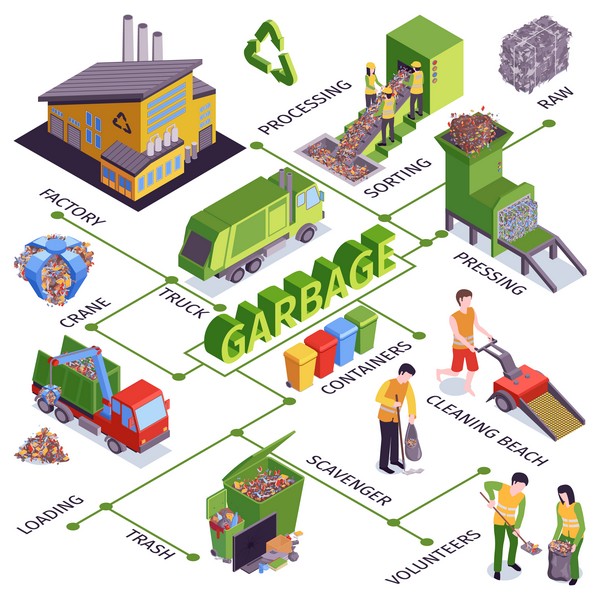
Adopted through a voice vote in the State Legislative Assembly, the Bill represents a decisive move away from the traditional “collect-and-dump” system and towards a circular-economy model that treats waste as a resource.
At the heart of this shift is the establishment of the Sustainable Resources and Wastes Management Authority (SRWMA), a dedicated body responsible for regulation, planning, monetisation, and enforcement across the entire waste sector.
The reform comes at a critical moment.
In 2023 alone, Sarawak produced 784,970 tonnes of municipal waste, straining ageing landfills and overstretched local authorities.
The previous decentralised framework resulted in variable performance, inconsistent data collection, and uneven recycling initiatives.
By consolidating responsibilities under a single authority, the state aims to streamline policies, strengthen infrastructure development, tighten enforcement, and stimulate a new market for recycled and recovered materials.
However, the Bill alone will not solve Sarawak’s waste challenges.
Malaysia’s national recycling rate has stalled at roughly 33–35% in recent years, short of the 40% goal set under the 12th Malaysia Plan.
Sarawak faces similar inconsistencies in public recycling practices, driven by weak segregation systems, insufficient collection points, limited processing facilities, and a lack of strong markets for recyclates.
That being said, real change requires not just new laws but shifts in public habits, logistical systems, and industrial capacity.
Insights from Other Countries
Global precedents illustrate the need for comprehensive implementation.
Singapore’s Resource Sustainability Act (2019) imposed firm Extended Producer Responsibility (EPR) requirements on e-waste, packaging, and food waste, but more importantly, backed these rules with gradual implementation, mandatory registration, dedicated funding mechanisms, and a well-developed collection network.


The effectiveness lies in pairing strong regulation with operational capability.
The United Kingdom’s EPR reforms shift responsibility and cost to industry while incentivising recyclable packaging through modulated fees.
Meanwhile, Japan, often cited as a global benchmark, underscores the importance of clear product-focused laws, strong coordination between municipalities and industry, and long-term market stability for recyclables.
Implications for Sarawak
- Need for reliable financing
The SRWMA must be backed by stable and adequate financing.
If the Authority is not properly resourced to run pilots, build infrastructure, and enforce regulations, it may exist only on paper.
Potential financing streams include state allocations, licensing fees, modest producer-based charges, and blended investment models for larger facilities such as regional sorting centres or organic waste plants.
- Introduce mandatory separation at source and phase in EPR by priority streams
Sarawak should implement mandatory separation-at-source in a gradual manner.
Recycling only works when households and businesses sort materials correctly; mixed waste makes processing costly and inefficient.
A phased approach, beginning with packaging, food waste, and e-waste, reflects the strategies that have worked best in places like Singapore and Japan.
- The importance of markets
A functioning recycling system depends on markets.
Even with strong collection efforts, recyclables are worthless if there is no demand.
To address this, Sarawak could generate initial demand by requiring a minimum recycled content in public procurement.
Additionally, helping private recyclers expand sustainably through grants, guaranteed off-take agreements, and technical support.
Standardising material quality will reduce contamination and ensure consistent products for buyers.
- The bill must address rural realities
The Bill must take Sarawak’s rural realities into account.
Because villages are far apart and populations are sparse, rural waste systems cannot simply copy urban models.
Establishing regional processing hubs, optimising multi-material collection routes, and incorporating informal recyclers can help achieve the necessary economies of scale.
- Transparent data is essential
Transparency starts with data.
A publicly accessible dashboard monitoring landfill diversion, recycling rates, emissions reductions, and producer compliance would foster public trust and provide investors with verifiable metrics.
Singapore’s EPR digital reporting system serves as an effective example.
Conclusion
If effectively implemented, Sarawak’s Sustainable Resources and Wastes Management Bill has the potential to generate wide-ranging social, environmental, and economic gains.
Waste-to-value industries would create green jobs, ease pressure on landfills, and reduce greenhouse gas emissions.
Improved waste services benefit public health, while strong recyclate markets attract investment in sustainable manufacturing.
But the milestone also comes with responsibilities.
Passing legislation is the first step; the real challenge lies in designing fair and effective regulations, harmonising councils under a unified framework, securing adequate funding, educating households, and supporting businesses during the transition.
Global experience shows that successful waste reform requires legislation backed by clear pathways and consistent support.
By recognising waste as a resource, Sarawak has taken a forward-thinking approach.
With strong policies, financing, and a people-focused rollout, the Sustainable Resources and Wastes Management Bill could set a national standard and demonstrate how a resource-rich state can lead Malaysia toward a circular economy.
References:
- Sarawak Passes Sustainable Resources and Wastes Management Bill 2025
- 784,970 Tonnes of Waste in 2023, Urgent Need for Sustainable Solutions
- From Trash to Cash
- Circular Economy Malaysia: Financial Instruments for the Sustainable Implementation of Waste Management and Circular Economy Case Study
- Extended Producer Responsibility for Packaging: Who is Affected and What to Do?
- Lessons from Japan’s EPR-based Container and Packaging Recycling Act and an Implication for Marine Plastic Reduction
- Extended Producer Responsibility (EPR) System for e-Waste Management System
- Japan’s Policy Related to Plastic Resource Circulation
- Municipal Solid Waste Management in the Sarawak State of Malaysia and the Way Forward
- Master Plan for Effective Management of Domestic Solid, Scheduled Wastes